Toyota Tsusho and Toho Gas Test Biogas Production From Sugarcane Residue in Brazil
The two companies are advancing a demonstration project that uses sugarcane residue to produce biogas in Brazil.

Toyota Tsusho and Toho Gas are advancing a demonstration project to produce biogas from sugarcane residue in Brazil. The effort, based on announcements from both companies, aims to turn an unused local resource into energy.
Biogas is a methane-based gas produced by fermenting food waste and livestock manure with microorganisms. As organic matter breaks down during fermentation, methane is generated, and it can be used as fuel.
Sugarcane is grown as a raw material for sugar and ethanol. The fibrous residue left after the cane is pressed was traditionally used for fuel and fertilizer, but parts of it still go unused.
Brazil is known as a major sugarcane producer and has abundant agricultural organic resources. If residue from such regions can be used as feedstock, resource recycling and local energy use could advance at the same time.
When refined to raise its methane content, biogas can be used in the same way as city gas. The involvement of Toho Gas, a gas utility, is likely to draw interest in exploring such uses.
This demonstration is at the stage of confirming, on the ground in Brazil, the full chain from securing feedstock to fermentation and gas use. Whether the business is viable will be determined by test results on factors such as the cost of collecting feedstock and the operating efficiency of equipment.
The focus is on the volume and quality of the gas produced in the demonstration, as well as how feedstock will be procured. Whether sugarcane residue can be collected stably is expected to be a key factor in deciding whether the project can move to commercialization.
Because biogas is made from renewable organic matter, it differs in nature from natural gas derived from fossil fuels. From a decarbonization standpoint, it is positioned as one option for switching fuels.
BLUE NOVA Hydrogen Journal view
The key point is that Toyota Tsusho and Toho Gas are running a demonstration in Brazil to produce biogas from sugarcane residue. Using unused agricultural residue as feedstock gives the project significance as an effort to combine resource recycling with decarbonization. Because it is still at the demonstration stage, gas output and business viability cannot yet be judged. Future announcements on how residue will be collected and the quality of the gas produced will be key to the commercial outlook.
Source: www.chukei-news.co.jp
This article was written by the editors based on the cited report and translated from Japanese. AI is used to assist in writing and translation.
More news

Green Carbon Signs MOU With Vietnam Province to Promote Low-Emission Rice Farming
The Japanese firm signed the agreement with the Gia Lai provincial agriculture authority after a 1,000-hectare trial confirmed methane cuts without lower yields.

Japan's First Batch-Type Dry Methane Fermentation Facility Begins Operation at Foot of Mount Fuji
The facility converts organic waste into biogas, creating renewable fuel and energy while marking the first installation of its kind in Japan.

Toyota Hilux Hydrogen Fuel Cell Vehicle to Be Built in Thailand From 2027
Plans call for a Hilux pickup equipped with a hydrogen fuel cell to be produced in Thailand starting in 2027.
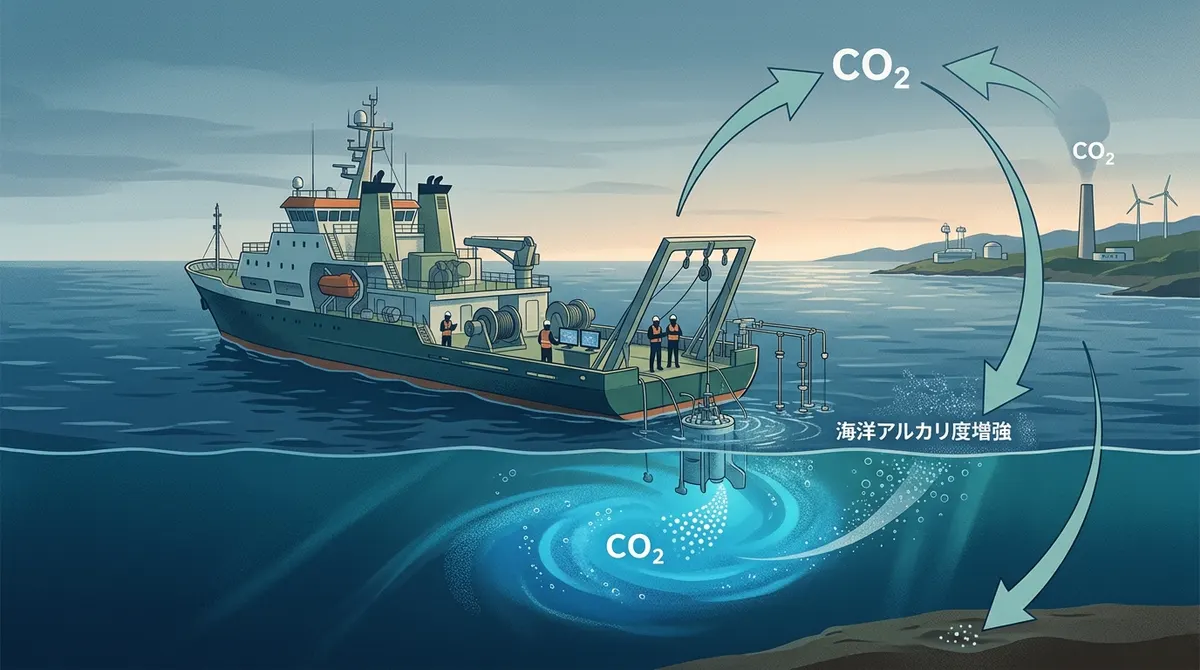
IMO Adopts Framework for Assessing Ocean CO2 Storage, Covering Three Technologies
The International Maritime Organization has adopted an assessment framework for ocean carbon dioxide storage technologies, covering three approaches including ocean alkalinity enhancement.