IMO Adopts Framework for Assessing Ocean CO2 Storage, Covering Three Technologies
The International Maritime Organization has adopted an assessment framework for ocean carbon dioxide storage technologies, covering three approaches including ocean alkalinity enhancement.
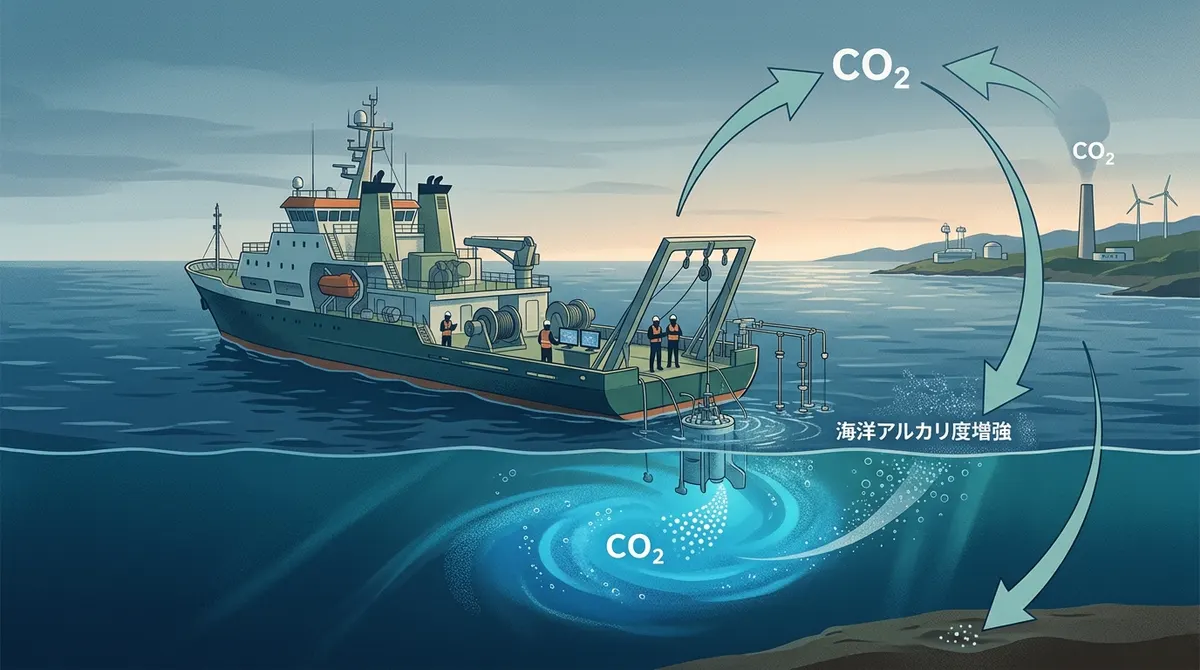
The International Maritime Organization (IMO) has adopted a framework for evaluating technologies that store carbon dioxide (CO2) in the ocean. The framework covers three technologies, including ocean alkalinity enhancement. Ocean CO2 storage has been studied as a way to keep CO2 dissolved in seawater locked away over long periods.
Ocean alkalinity enhancement is a method that increases the alkalinity of seawater so that it can take in CO2 more readily. It aims to absorb CO2 from the atmosphere into the sea while preventing seawater from becoming more acidic. The remaining two technologies are also subject to the assessment.
The assessment framework sets out procedures for evaluating environmental risks and effects before a new technology is implemented. By clarifying which technologies are covered and what information must be provided, it allows countries and businesses to make decisions under the same standards.
Ocean CO2 storage raises questions about measuring the amount stored, its effects on marine ecosystems, and its long-term stability. Without mechanisms to examine these issues, the reliability of emissions reduction benefits would be in doubt. Adopting the framework is a step toward incorporating that review into an international system.
In shipping, the IMO is advancing international regulations to reduce greenhouse gas emissions, and interest in ocean-based CO2 measures is growing. For the shipping industry, the framework provides material for judging how effective ocean CO2 storage may be.
The next steps to watch are how individual technologies are reviewed under the assessment framework and whether demonstration projects in the ocean proceed under it. A careful approach to confirming environmental impacts will be a precondition for the spread of these technologies.
BLUE NOVA Hydrogen Journal view
The IMO's adoption of an assessment framework signals that measures to address CO2 using the ocean have entered a stage in which they are evaluated against common international standards. Compared with land-based carbon removal technologies, the ocean offers a vast area, but its effects on ecosystems are difficult to predict. The framework is significant because it allows the benefits and risks of technologies to be compared on the same scale. Actual deployment will depend on the outcomes of individual technology reviews and demonstrations, so the ongoing discussion will need to be followed closely.
Source: Sustainable Japan
This article was written by the editors based on the cited report and translated from Japanese. AI is used to assist in writing and translation.
More news

Green Carbon Signs MOU With Vietnam Province to Promote Low-Emission Rice Farming
The Japanese firm signed the agreement with the Gia Lai provincial agriculture authority after a 1,000-hectare trial confirmed methane cuts without lower yields.

Japan's First Batch-Type Dry Methane Fermentation Facility Begins Operation at Foot of Mount Fuji
The facility converts organic waste into biogas, creating renewable fuel and energy while marking the first installation of its kind in Japan.

Toyota Hilux Hydrogen Fuel Cell Vehicle to Be Built in Thailand From 2027
Plans call for a Hilux pickup equipped with a hydrogen fuel cell to be produced in Thailand starting in 2027.

Study uses platinum-based quaternary alloy catalyst to cut green hydrogen costs
Researchers are testing electrolytic reforming of ethanol with a platinum-based quaternary alloy catalyst to lower the cost of producing green hydrogen.