Green Carbon Signs MOU With Vietnam Province to Promote Low-Emission Rice Farming
The Japanese firm signed the agreement with the Gia Lai provincial agriculture authority after a 1,000-hectare trial confirmed methane cuts without lower yields.
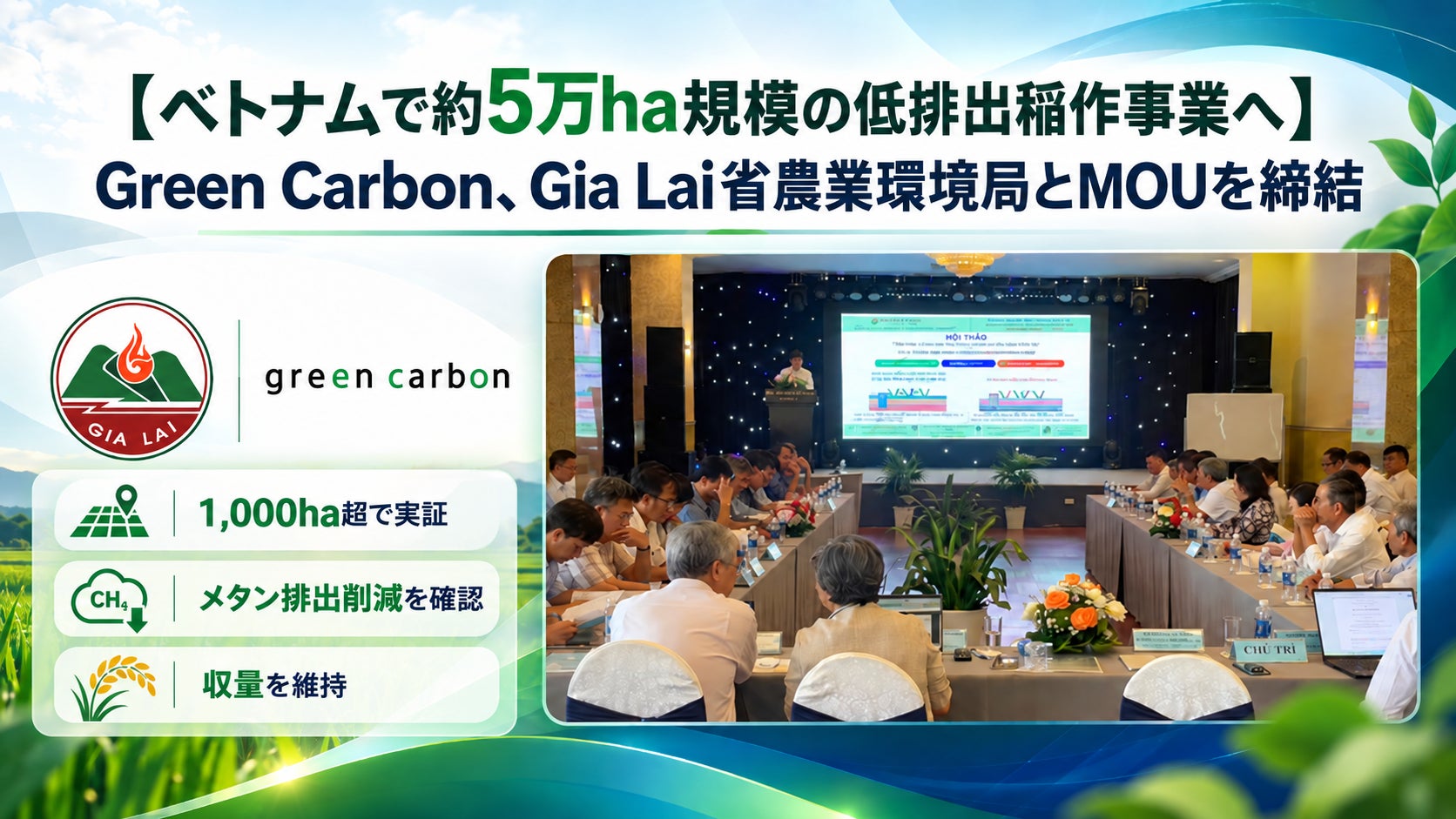
Green Carbon Co., Ltd. announced on October 23, 2026, that it had confirmed reduced methane emissions and maintained crop yields in a low-emission rice farming demonstration project in Vietnam's Gia Lai Province. The project covered 1,000 hectares of paddy fields. The company operates what it says is Japan's largest nature-based carbon credit generation and sales business.
On September 11, 2026, the company signed a memorandum of understanding (MOU) with the Department of Agriculture and Environment (DAE) of Gia Lai Province to promote and expand low-emission rice farming, at a workshop for stakeholders on the results of the summer-autumn 2026 crop and the implementation plan for 2027. The MOU is based on the results of the demonstration and is intended to set the framework for future expansion.
The goal is to expand the project to about 50,000 hectares, roughly 30% of the province's total annual rice planting area. The company said it would thereby pursue greenhouse gas emission reductions and the creation of carbon credits.
Low-emission rice farming refers to efforts such as water management that suppress methane emissions produced by microorganisms in paddy fields. When fields are covered with water and become anaerobic, the decomposition of organic matter tends to generate methane, and emissions can be reduced by adjusting the timing of water replacement and drainage. Confirming that yields do not decline is a prerequisite for wider adoption.
Carbon credits are units that represent emission reductions or removals that can be bought and sold. Once the reductions are recognized by a third party, companies and organizations can purchase the credits to offset their own emissions or to certify their efforts. Reductions from rice farming are treated as credits in the agricultural sector, and operators build up reduction volumes in cooperation with farmers.
The company has developed nature-based credits in Japan, and this project signals the expansion of its work into overseas agriculture. Vietnam is a major rice-producing country, and methane reductions from paddy fields could represent a significant opportunity.
Key points to watch include when actual credits will be issued and how farmer participation and water management practices will take hold as the project expands to 50,000 hectares. As the effort moves from demonstration to a broader rollout, the methods for measuring and verifying emission reductions will determine its credibility.
BLUE NOVA Hydrogen Journal view
The announcement marks a stage in which agricultural efforts to cut methane emissions from paddy fields are expanding into an area-based project in Vietnam. A feature of the initiative is that a Japanese company has signed an MOU with local government authorities and is pursuing emission cuts while maintaining yields. Methane has a greater greenhouse effect than carbon dioxide, so reductions from rice farming carry significant weight in climate action. However, for the credits to be recognized, verification of reductions is indispensable, and achieving the 50,000-hectare target will require continued farmer participation and water management.
Source: PR TIMES
This article was written by the editors based on the cited report and translated from Japanese. AI is used to assist in writing and translation.
More news

Japan's First Batch-Type Dry Methane Fermentation Facility Begins Operation at Foot of Mount Fuji
The facility converts organic waste into biogas, creating renewable fuel and energy while marking the first installation of its kind in Japan.

Toyota Hilux Hydrogen Fuel Cell Vehicle to Be Built in Thailand From 2027
Plans call for a Hilux pickup equipped with a hydrogen fuel cell to be produced in Thailand starting in 2027.
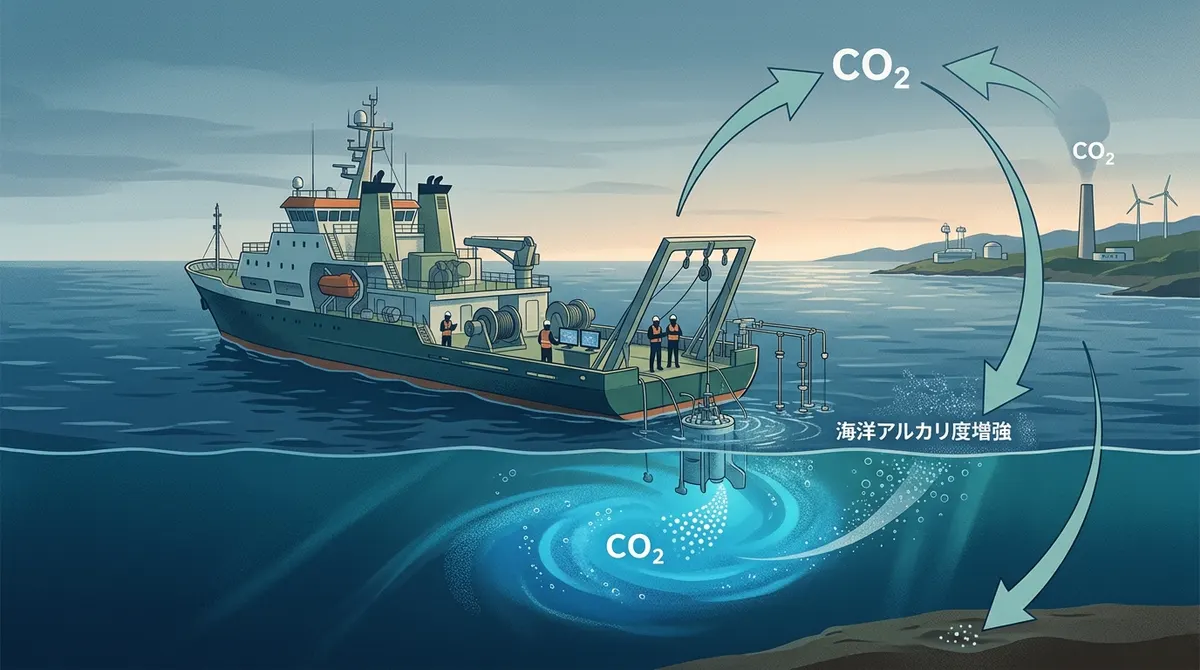
IMO Adopts Framework for Assessing Ocean CO2 Storage, Covering Three Technologies
The International Maritime Organization has adopted an assessment framework for ocean carbon dioxide storage technologies, covering three approaches including ocean alkalinity enhancement.

Study uses platinum-based quaternary alloy catalyst to cut green hydrogen costs
Researchers are testing electrolytic reforming of ethanol with a platinum-based quaternary alloy catalyst to lower the cost of producing green hydrogen.