Kyoto University Takes Step Toward Hydrogen Production With MOF Glass Membrane
Kyoto University developed a membrane material that operates at the temperature of steam from factory wastewater, a step toward using waste heat for hydrogen production.

Kyoto University announced that it has developed a membrane material that operates at the temperature of factory wastewater steam, applying a material made by shaping MOFs (metal-organic frameworks) into a glass membrane. The result is a step closer to technology that efficiently produces hydrogen. A notable feature is that it points toward using waste heat that has previously been discarded.
The material in this research is a porous material called a MOF, in which metal ions and organic molecules are regularly bonded, formed into a membrane. MOFs are known for having extremely fine pores inside and for being easy to design to pass only specific molecules. Shaping them into a glass membrane also makes them easier to handle as a membrane.
Hydrogen is the lightest element and exists as hydrogen molecules in its elemental form. Industrially, it is produced by steam reforming of natural gas, water electrolysis, and other methods. Production using fossil fuels emits carbon dioxide, so methods that use renewable energy or waste heat are drawing attention from a decarbonization standpoint.
Hydrogen separation using membranes is a mechanism that selectively passes only hydrogen from a mixed gas. The permeability of hydrogen-passing membranes depends on molecular size and compatibility with the material. Many membranes operate at high temperatures, but water vapor from factory wastewater is at a relatively low temperature, so it has been difficult to use as is. The new material is notable for working in that temperature range.
Factories discharge large amounts of heat in the form of steam and hot water, but much of it is not effectively used and is discarded. If this waste heat could power hydrogen production, the need to burn new fuel could be reduced. However, durability of the membrane, cost at mass production, and resistance to actual wastewater components still need to be verified.
Demand for hydrogen is expected in fuel cell vehicles, industrial fuel, and as a chemical feedstock. Reducing carbon dioxide emissions during production is an essential condition for positioning hydrogen as a means of decarbonization. The results are seen as expanding the options for production methods.
The next focus is verifying membrane performance and long-term stability in conditions close to actual operation. If the research advances, it could also lead to studies on linking factory waste heat to regional hydrogen supply.
BLUE NOVA Hydrogen Journal view
The significance of this research is that it shows factory wastewater steam, which has been discarded, could be used as a heat source for hydrogen production. Hydrogen emits no carbon dioxide when used, but production using fossil fuels generates emissions. If production can run on waste heat, the problem can be addressed from a different angle. However, what has been shown is at the material development stage, and durability and cost must be confirmed before commercialization. Readers will find it easier to understand as research that rethinks hydrogen from the perspective of how it is made.
Source: 京都大学
This article was written by the editors based on the cited report and translated from Japanese. AI is used to assist in writing and translation.
More news
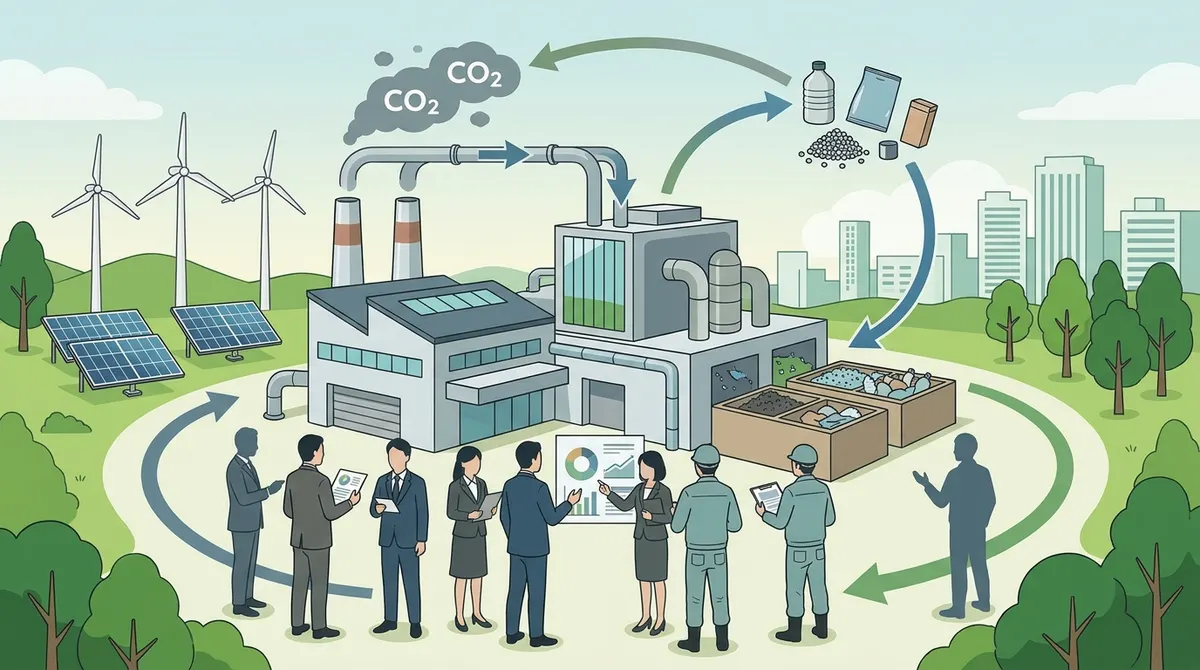
Environment Ministry Plans Public-Private Group for Circular Economy
The Ministry of the Environment has announced plans to set up a public-private organization to promote a circular economy, including carbon dioxide capture and plastic recycling.
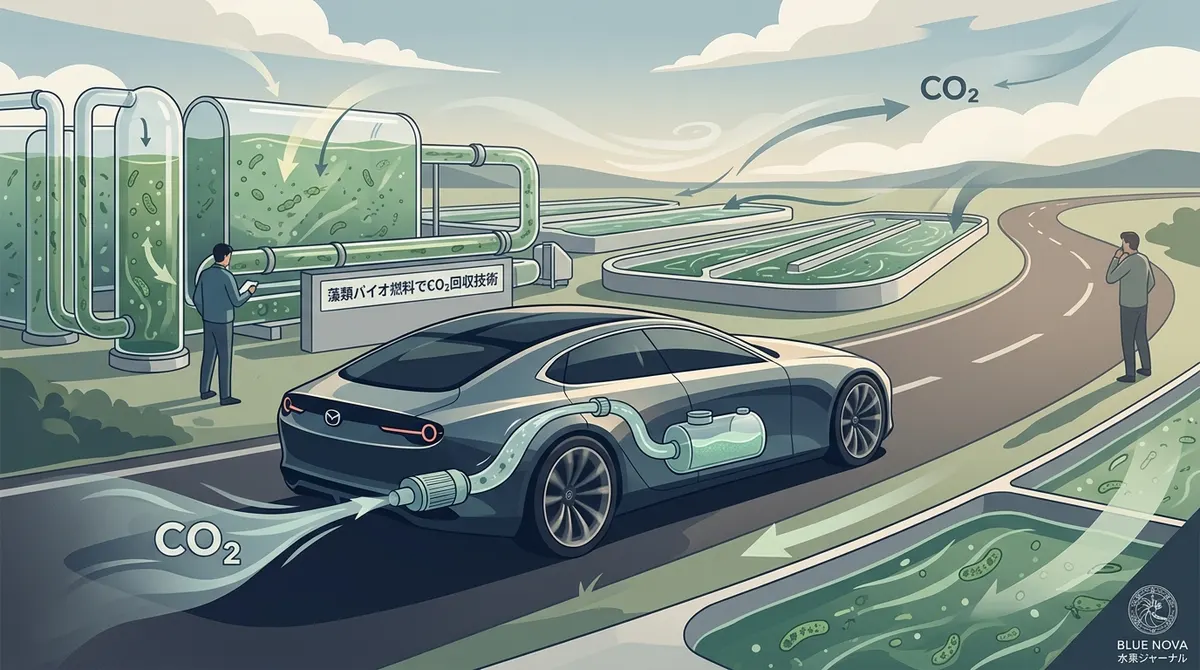
Mazda Aims to Capture CO2 During Driving With Algae Biofuel in the 2030s
Mazda is aiming to commercialize in the 2030s a technology that uses biofuel made from algae to capture carbon dioxide emitted while vehicles are driven.
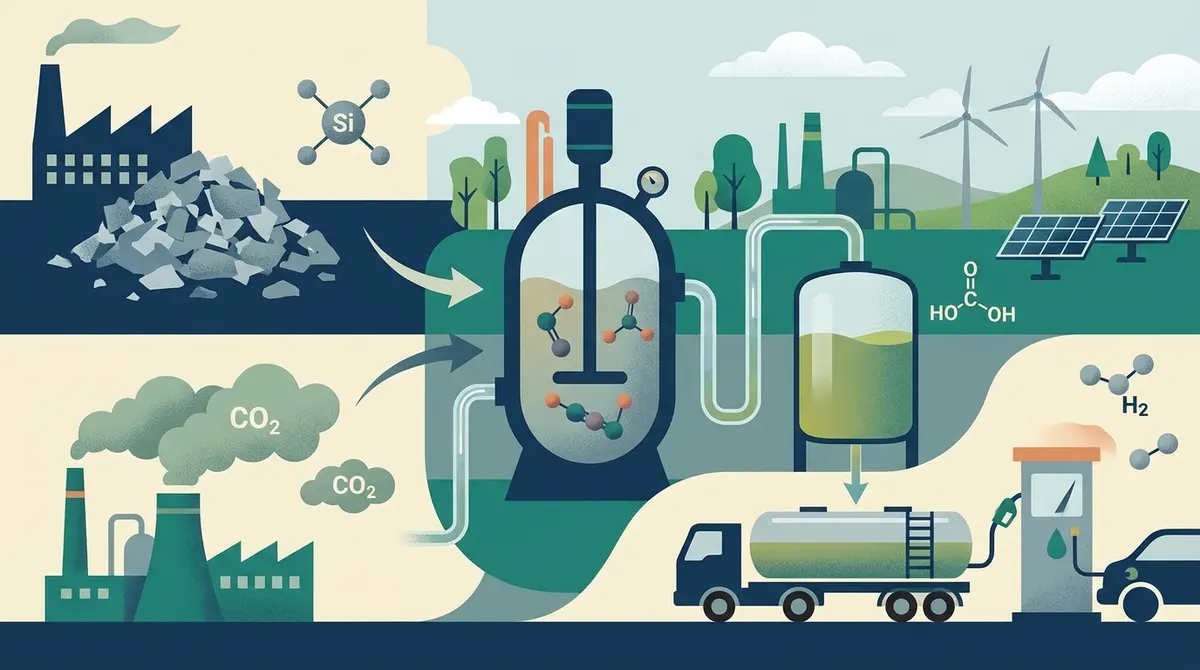
Chugoku Electric, Three Partners Start Research on Hydrogen Carrier From Waste Silicon
Four entities including Chugoku Electric Power have begun research to produce a formic acid hydrogen carrier from waste silicon and carbon dioxide.

Konoike Construction to produce biogas from dairy cow manure in Shizuoka without producing wastewater
Konoike Construction is developing a biogas production project in Shizuoka Prefecture that uses dairy cow manure and produces no liquid waste.