Environment Ministry Plans Public-Private Group for Circular Economy
The Ministry of the Environment has announced plans to set up a public-private organization to promote a circular economy, including carbon dioxide capture and plastic recycling.
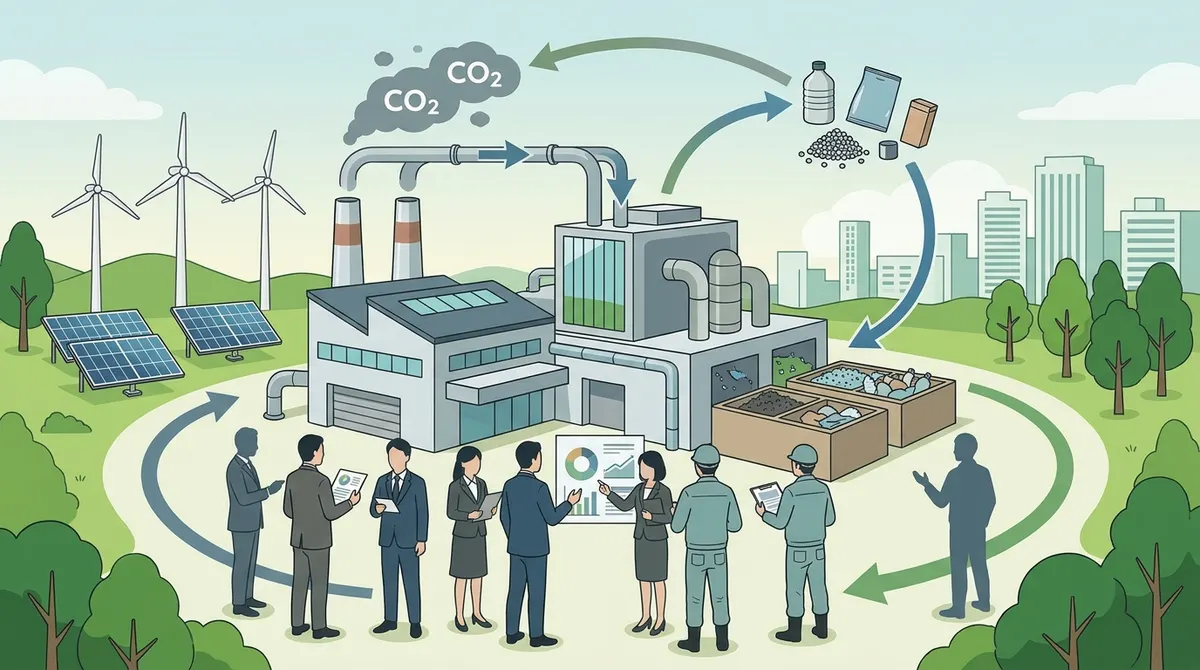
The Ministry of the Environment has announced plans to establish a public-private organization aimed at realizing a circular economy. The scope includes the capture of carbon dioxide and the recycling of plastics. The move would advance climate change measures and resource measures within a single framework.
A circular economy is an economic system that avoids using resources once and discarding them, instead reusing products and materials repeatedly to reduce waste. It seeks to move away from the one-way flow of mass production, mass consumption and mass disposal, and is based on the premise of resource circulation. The concept relates to both climate change measures and the effective use of resources.
Carbon dioxide capture is a technology that separates and collects CO2 from exhaust gases from factories and power plants, among other sources. Technologies that use captured carbon dioxide are called Carbon Capture and Utilization, and when storage is included, they are abbreviated as CCUS. The technologies and business models will differ depending on whether the emphasis is on capture, utilization or storage.
Many plastics are made from petroleum, and their production and incineration emit carbon dioxide. Reducing the use of new raw materials through recycling can help curb emissions. Recycling methods include collecting plastics and returning them to the same material, and chemically breaking them down into raw materials.
The significance of the public-private organization lies in promoting the practical use of technologies that are difficult to advance through government alone, and in supporting collaboration among companies. A framework that integrates resource collection, reuse systems and a review of product design is needed. Specific structures and processes are still being worked out.
Attention is expected to focus on the specific initiatives the organization undertakes after its launch and on mechanisms for companies to participate. Which technologies are given priority and which industries move first will be the key points going forward.
BLUE NOVA Hydrogen Journal view
The ministry's policy of advancing a circular economy through a public-private organization is significant as an effort to treat climate change measures and resource measures as one. Carbon dioxide capture and utilization is one way to reduce emissions, while plastic recycling is a way to curb the use of petroleum-based raw materials. Because each has limited effect on its own, they need to be designed in combination. The effectiveness of this policy will depend on the specific projects and systems that follow.
Source: 静岡新聞DIGITAL
This article was written by the editors based on the cited report and translated from Japanese. AI is used to assist in writing and translation.
More news

Kyoto University Takes Step Toward Hydrogen Production With MOF Glass Membrane
Kyoto University developed a membrane material that operates at the temperature of steam from factory wastewater, a step toward using waste heat for hydrogen production.
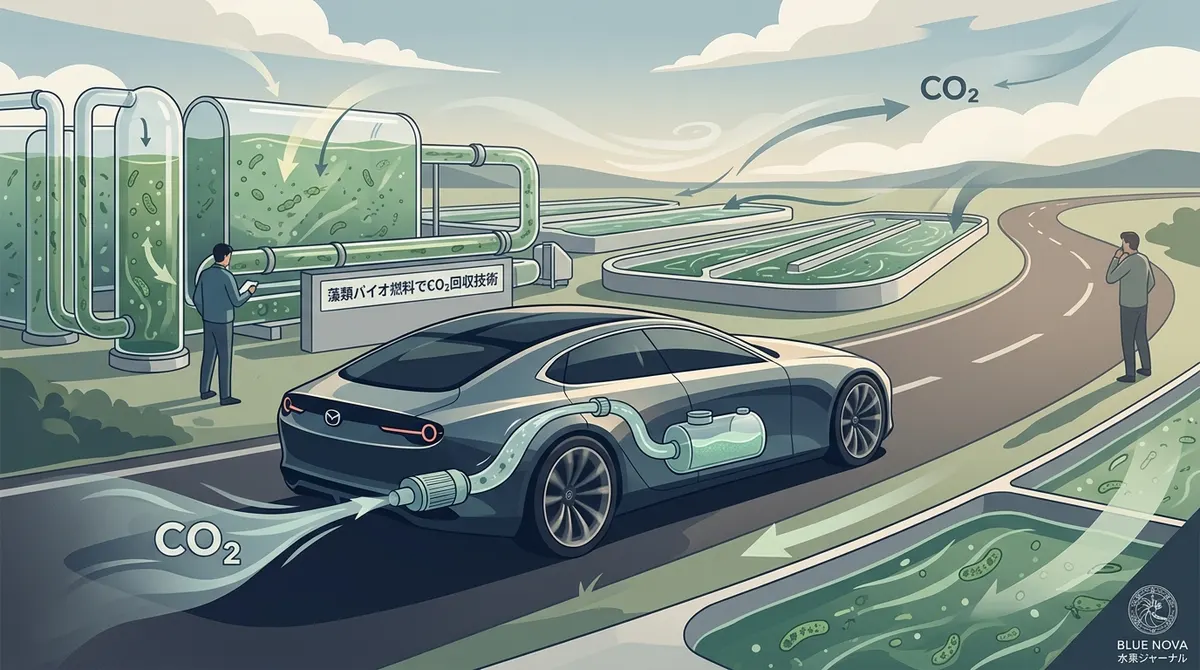
Mazda Aims to Capture CO2 During Driving With Algae Biofuel in the 2030s
Mazda is aiming to commercialize in the 2030s a technology that uses biofuel made from algae to capture carbon dioxide emitted while vehicles are driven.
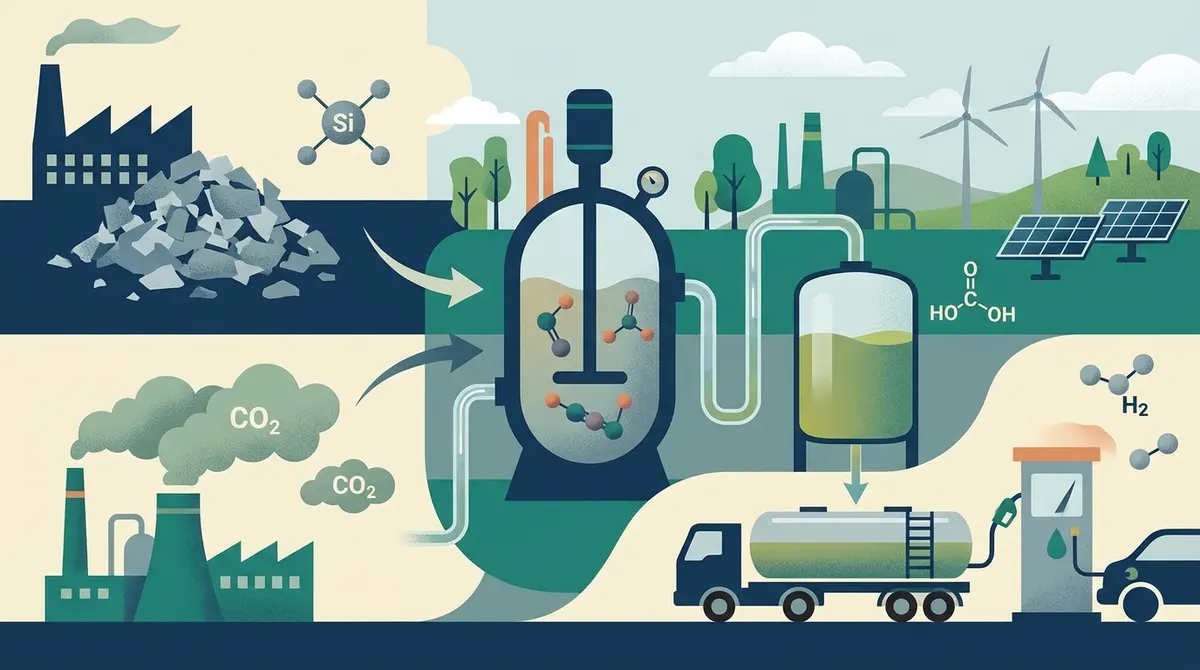
Chugoku Electric, Three Partners Start Research on Hydrogen Carrier From Waste Silicon
Four entities including Chugoku Electric Power have begun research to produce a formic acid hydrogen carrier from waste silicon and carbon dioxide.

Konoike Construction to produce biogas from dairy cow manure in Shizuoka without producing wastewater
Konoike Construction is developing a biogas production project in Shizuoka Prefecture that uses dairy cow manure and produces no liquid waste.