Chugoku Electric, Three Partners Start Research on Hydrogen Carrier From Waste Silicon
Four entities including Chugoku Electric Power have begun research to produce a formic acid hydrogen carrier from waste silicon and carbon dioxide.
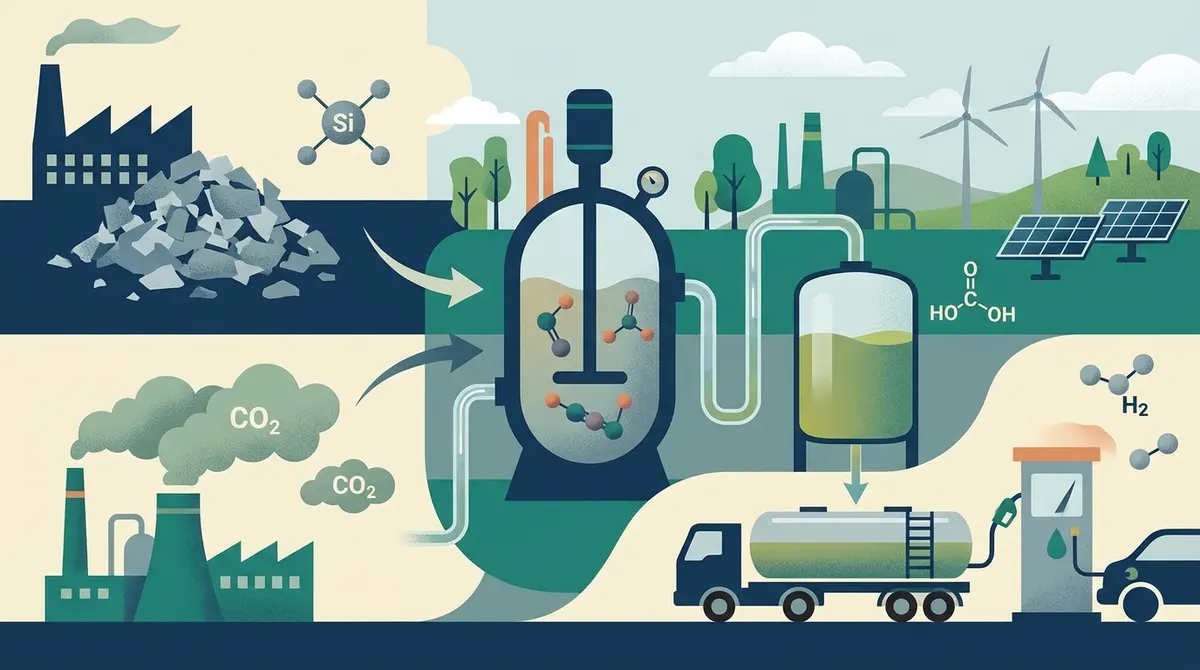
Chugoku Electric Power and three other entities have begun research to produce a formic acid hydrogen carrier from waste silicon and carbon dioxide (CO2). A distinctive feature of the research is its use of discarded silicon and emitted CO2 as raw materials.
Hydrogen is the lightest element and is a gas at normal temperature and pressure. Because its energy density per unit volume is low, special measures are needed to transport it in large quantities or store it for long periods. For this reason, methods that bind hydrogen to another substance for transport are being studied, and such substances are called hydrogen carriers.
Formic acid is an organic compound that is liquid at room temperature and is known as a substance that is easy to handle. If hydrogen is incorporated into formic acid for transport, it may be possible to transport and store it using facilities similar to those for existing liquid fuels. The basic concept is to combine a reaction that extracts hydrogen from formic acid with a reaction that returns hydrogen to formic acid.
The raw material is what draws attention in this research. Silicon includes byproducts generated in the manufacturing of semiconductors and solar cells, and it is a material for which effective use of resources has long been a challenge. If waste silicon can be used to produce hydrogen carriers, it would also have the meaning of recycling waste.
Incorporating CO2 as a raw material is also important. The idea of circulating emitted carbon as a material for fuel is widely studied in decarbonization efforts. However, the overall CO2 reduction effect depends greatly on the type of energy used to produce hydrogen.
The research is at an early stage, and no figures have been given for production scale or costs. Going forward, the focus is likely to be on methods for preparing raw materials from waste silicon, the efficiency of synthesizing and decomposing the formic acid hydrogen carrier, and stability during repeated use.
Expanding the use of hydrogen requires a system that links production, transport, storage and use. Hydrogen carriers are positioned as a technology for the transport stage, and whether existing infrastructure can be used will be key to their adoption.
Whether the research moves to demonstration depends on whether prospects for efficiency and cost can be established. In considering how to restructure hydrogen supply networks, progress in this research will be a point to watch.
BLUE NOVA Hydrogen Journal view
Transporting hydrogen, not just producing it, is a challenge, and this research is significant for pointing toward using formic acid, which can be handled as a liquid, as a hydrogen carrier. Using waste silicon and CO2 as raw materials reflects an idea of circulating waste and emissions as resources, which overlaps with decarbonization efforts. However, because the research is still at an early stage, the timing of commercialization and economic viability must await further verification. Whether the options for hydrogen carriers expand will depend on evaluations that include the energy balance from production to use. Readers should follow this research from two angles: advances in hydrogen transport technology and the idea of using waste as raw material.
Source: Dellows News
This article was written by the editors based on the cited report and translated from Japanese. AI is used to assist in writing and translation.
More news

Kyoto University Takes Step Toward Hydrogen Production With MOF Glass Membrane
Kyoto University developed a membrane material that operates at the temperature of steam from factory wastewater, a step toward using waste heat for hydrogen production.
Environment Ministry Plans Public-Private Group for Circular Economy
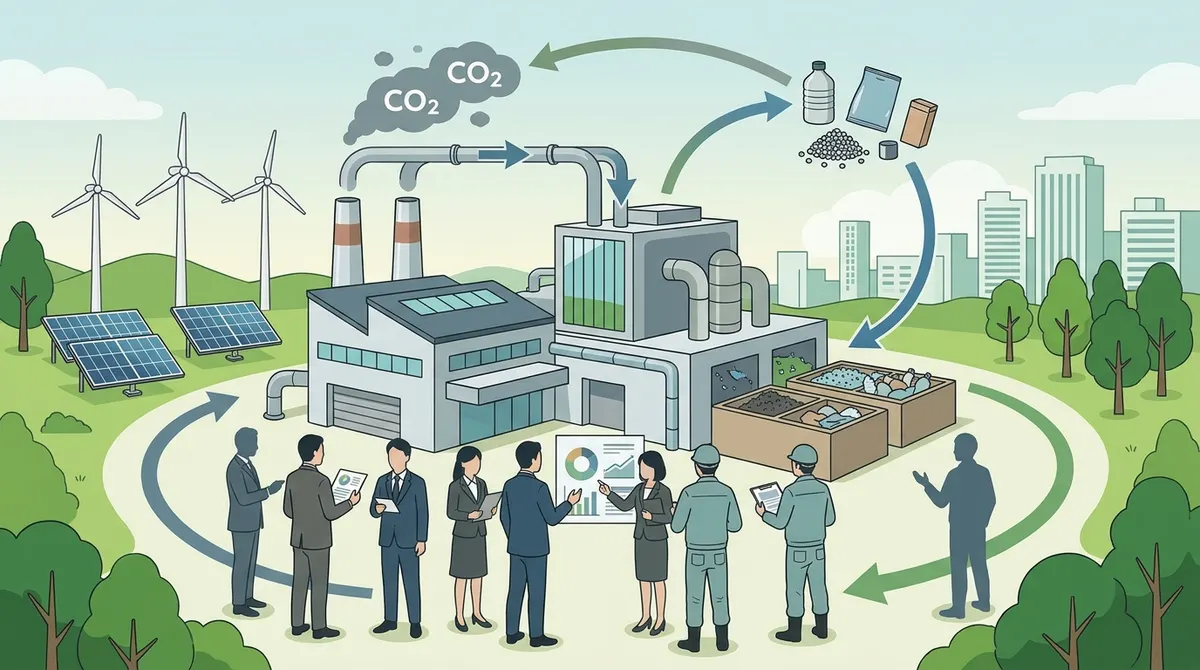
The Ministry of the Environment has announced plans to set up a public-private organization to promote a circular economy, including carbon dioxide capture and plastic recycling.
Mazda Aims to Capture CO2 During Driving With Algae Biofuel in the 2030s
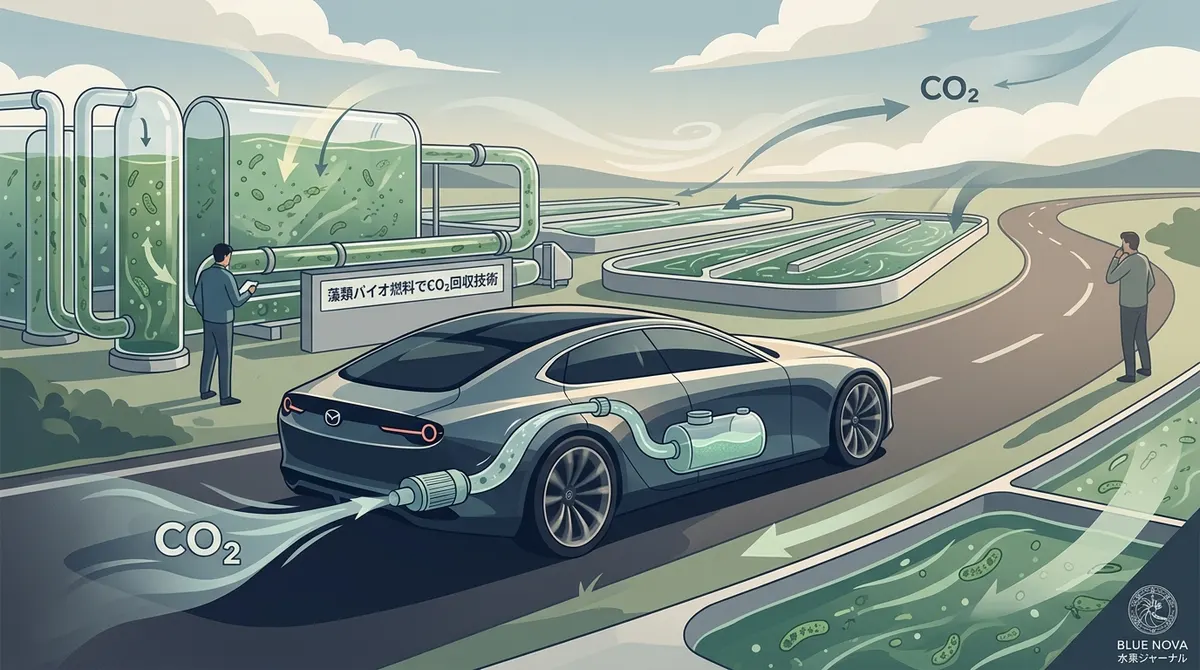
Mazda is aiming to commercialize in the 2030s a technology that uses biofuel made from algae to capture carbon dioxide emitted while vehicles are driven.

Konoike Construction to produce biogas from dairy cow manure in Shizuoka without producing wastewater
Konoike Construction is developing a biogas production project in Shizuoka Prefecture that uses dairy cow manure and produces no liquid waste.