Mazda Aims to Capture CO2 During Driving With Algae Biofuel in the 2030s
Mazda is aiming to commercialize in the 2030s a technology that uses biofuel made from algae to capture carbon dioxide emitted while vehicles are driven.
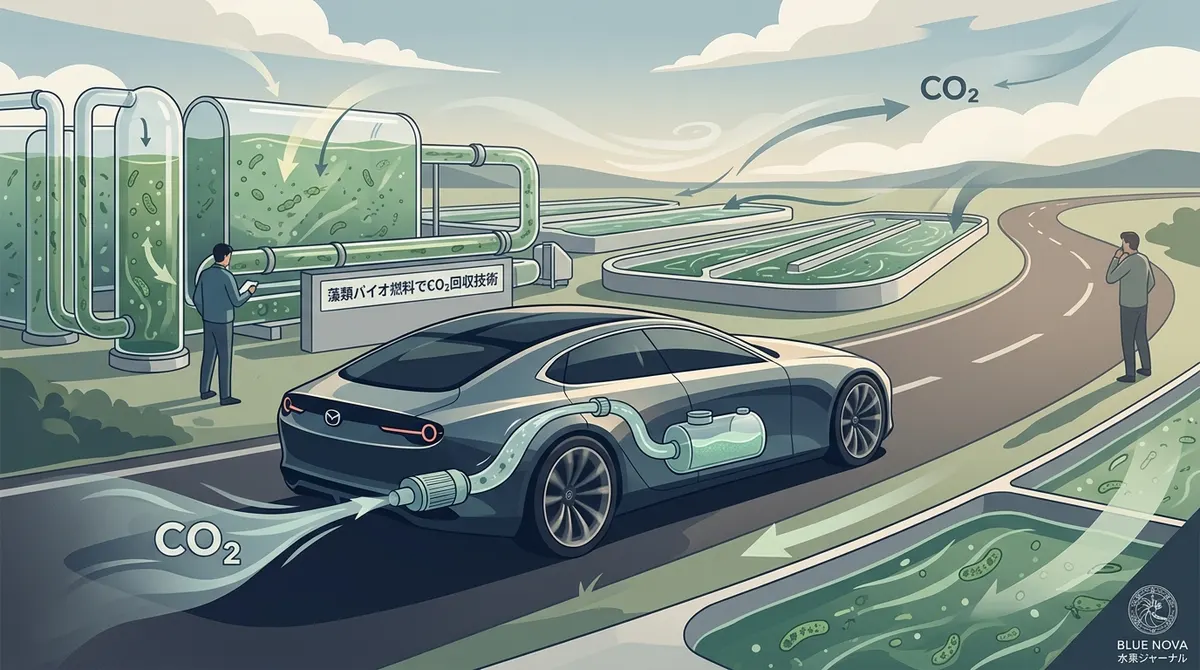
Mazda is aiming to commercialize in the 2030s the use of biofuel made from algae and a technology to capture carbon dioxide emitted during driving. The initiative was presented as an option for decarbonization that does not rely solely on electric vehicles.
Algae are organisms that take in carbon dioxide from the atmosphere through photosynthesis and store oil in their bodies. The basic concept of biofuel is to use that oil as a fuel raw material. A key feature is that the CO2 released when it is burned can be considered offset by the CO2 that plants and other organisms absorbed earlier.
The concept presented involves using algae-derived fuel in vehicles and capturing the CO2 emitted during driving. Unlike typical explanations of EVs, it includes the idea of collecting emissions rather than only reducing them.
Electric vehicles (EVs) have been the central focus of decarbonization efforts. Meanwhile, vehicles with conventional internal combustion engines and ways to rethink the fuel itself are also being studied. This initiative can be seen as one part of a broader search for paths beyond electrification.
Biofuels tend to face challenges such as securing raw materials, the energy needed for production, and manufacturing costs. Algae may be grown without requiring large areas of land or water, but establishing technology for stable, large-scale production is necessary.
Technology that captures CO2 from vehicles must consider how the captured CO2 is stored and used. The overall system will change significantly depending on which stages are handled in the vehicle and which are left to separate facilities.
Points of attention going forward include algae cultivation and fuel production technologies, how the capture systems are integrated into vehicles, and how the captured CO2 is handled. Progress in research and the content of demonstrations will be tested against the goal of commercialization in the 2030s.
Decarbonization options are not limited to one, and multiple approaches are likely to coexist depending on regional conditions and how vehicles are used. This initiative can be seen as an example that illustrates this diversity.
BLUE NOVA Hydrogen Journal view
Electrification of automobiles has drawn the most attention in decarbonization, but this initiative is notable for showing a way to reduce emissions from the fuel side. Algae-derived biofuel is considered capable of offsetting the CO2 released when burned with the CO2 absorbed by plants, so the way fuel is chosen changes how emissions are viewed. The idea of capturing CO2 during driving is also new, in that it builds a system for collecting emissions into the vehicle rather than only curbing them. However, the mass production of algae and the outlook for costs remain challenges. Readers should view this initiative in light of the current situation, in which multiple decarbonization paths including EVs are being explored in parallel.
Source: 朝日新聞
This article was written by the editors based on the cited report and translated from Japanese. AI is used to assist in writing and translation.
More news

Kyoto University Takes Step Toward Hydrogen Production With MOF Glass Membrane
Kyoto University developed a membrane material that operates at the temperature of steam from factory wastewater, a step toward using waste heat for hydrogen production.
Environment Ministry Plans Public-Private Group for Circular Economy
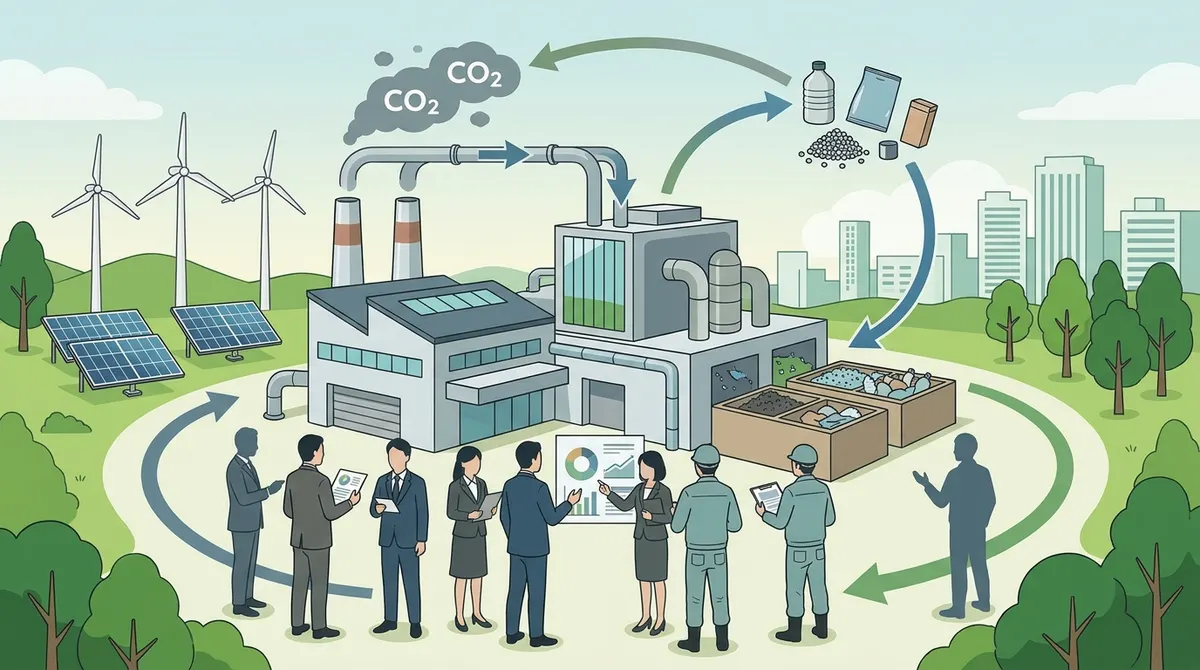
The Ministry of the Environment has announced plans to set up a public-private organization to promote a circular economy, including carbon dioxide capture and plastic recycling.
Chugoku Electric, Three Partners Start Research on Hydrogen Carrier From Waste Silicon
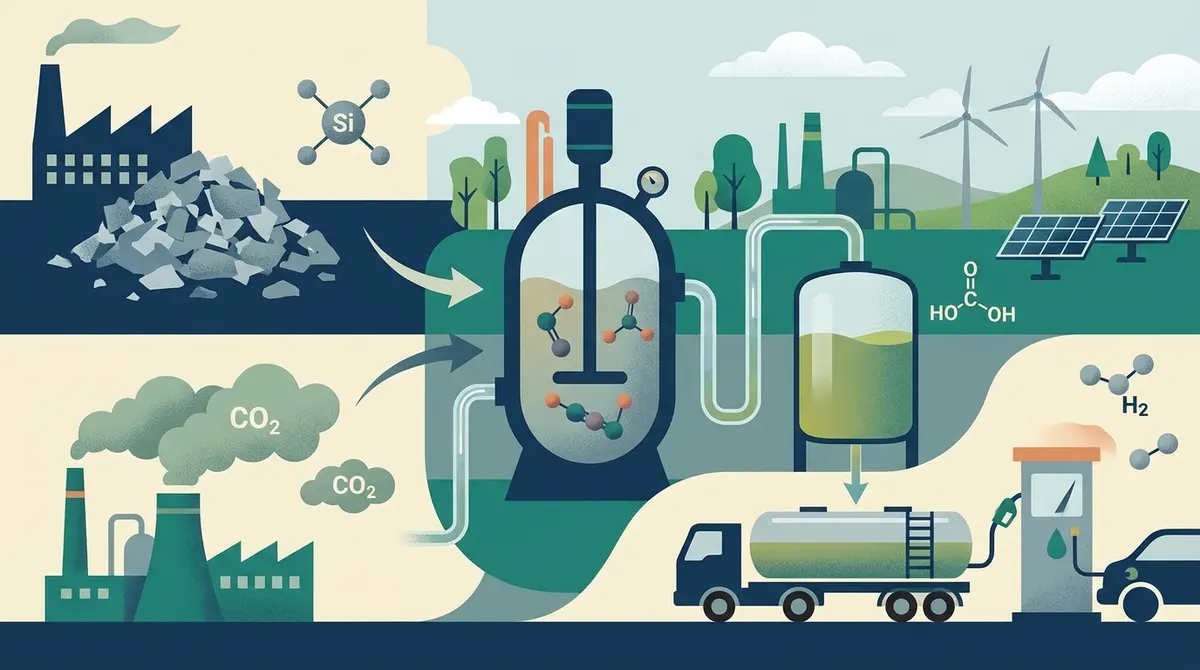
Four entities including Chugoku Electric Power have begun research to produce a formic acid hydrogen carrier from waste silicon and carbon dioxide.

Konoike Construction to produce biogas from dairy cow manure in Shizuoka without producing wastewater
Konoike Construction is developing a biogas production project in Shizuoka Prefecture that uses dairy cow manure and produces no liquid waste.