Taguchi Kogyo's Daisen plant begins renewable power supply via onsite solar PPA
Chugin Energy has installed solar power equipment on the roof of the plant of the construction machinery attachment maker to help decarbonize its electricity use.
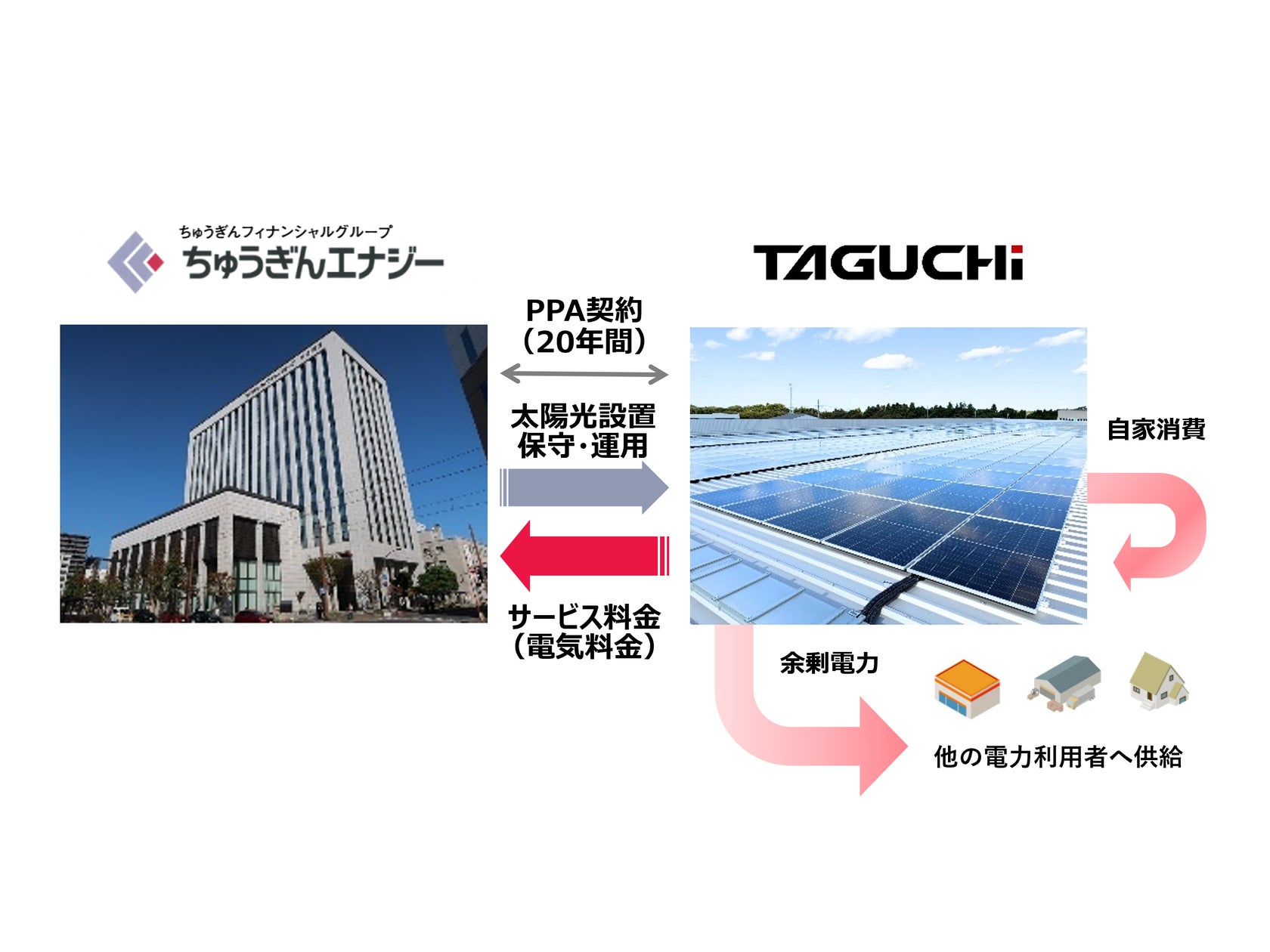
Chugin Energy said on November 26, 2026, that it has installed solar power equipment at Taguchi Kogyo's Daisen Plant and started supplying renewable energy. The companies are advancing the project under a solar power purchase agreement, and the system is being introduced through an onsite PPA that uses the roof of the Daisen Plant.
Taguchi Kogyo is a manufacturer of attachments for construction machinery and supports work sites in the construction and demolition industries. In the environmental field, the company has pursued efficiency improvements in installing renewable energy equipment, joint development with JAXA, and environmentally conscious product development, including patent acquisition, as part of its efforts toward the Sustainable Development Goals.
A power purchase agreement (PPA) is a scheme in which a PPA provider installs and operates a solar power system on a customer's roof, typically at no upfront cost to the customer, and the customer buys the electricity generated. A distinctive feature is that it allows customers to adopt renewable electricity while limiting initial investment. In terms of usage, the term refers to a long-term contract in which a power producer and a customer buy and sell electricity.
An onsite PPA is a setup in which generation equipment is installed on the same premises where the electricity is used. Because the generated power is consumed on the spot, losses from transmission are less likely to occur, and the arrangement can directly supply a factory's electricity needs.
The initiative aims to decarbonize electricity use at the Oyama Plant and reduce environmental impact in the local area. According to the announcement, the project's effect is estimated to be equivalent to the annual absorption of about 52,000 cedar trees. This figure refers to materials from the Forestry Agency.
For calculating CO2 emissions, the companies used electricity provider-specific emission factors, partially updated on August 3, 2026, by the Ministry of the Environment and the Ministry of Economy, Trade and Industry. Because emission factors differ by power company, they are cited as the basis for calculating emission reductions.
Chugin Energy, a member of Chugin Financial Group, runs renewable energy businesses based in Okayama. The scheme is one example of its work supporting client companies' decarbonization efforts.
Attention is focused on whether PPA-based renewable energy adoption will spread among mid-sized regional manufacturers. Onsite PPAs that use roofs are expected to see growing adoption at local manufacturing sites as a way for companies without their own equipment to use renewable electricity.
Background
A PPA is an arrangement in which a provider installs and operates solar power equipment, and the customer buys the electricity generated. Because companies can use renewable energy without making their own equipment investments, adoption in Japan has grown since the late 2010s. Onsite models using factory and logistics facility roofs have drawn attention as a way to decarbonize manufacturing, since the generated power can be used on the spot. Companies are under pressure to cut greenhouse gas emissions, and this is positioned as one way to reduce electricity-related emissions.
Source: PR TIMES
This article was written by the editors based on the cited report and translated from Japanese.
More news

TESS Group wins contract from Kokuei to install grid-scale battery storage facility
The project covers an approximately 8.3 MWh storage facility, and the group plans to provide aggregation services after equipment delivery.

Haseko, Taisei and Kaneka develop balcony railing solar system for condominiums
Haseko plans to use the glass railing solar product at a condominium project in Shinagawa Ward developed in-house by Haseko.

Tokyo Gas imports Malaysian biomethane into Japan for the first time
Tokyo Gas and Petronas jointly imported about 40,000 cubic meters of biomethane at the Ogishima LNG terminal, expanding Asian sourcing.
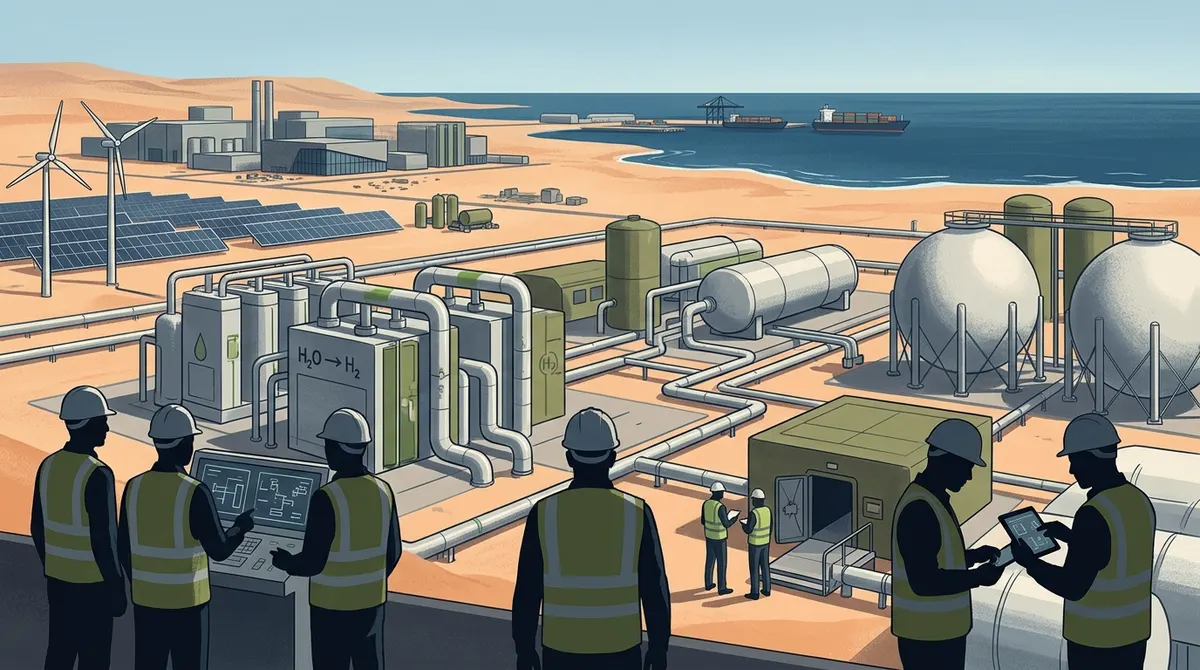
Saudi Arabia builds workforce base for one of the world's largest green hydrogen plants
Saudi Arabia plans to begin commercial operation of one of the world's largest green hydrogen production facilities at Oxagon in NEOM in 2027.