Precious-metal-free high-entropy oxide catalyst performs well in green hydrogen production
A research team reports that an earth-abundant catalyst operated stably in anion exchange membrane water electrolysis.
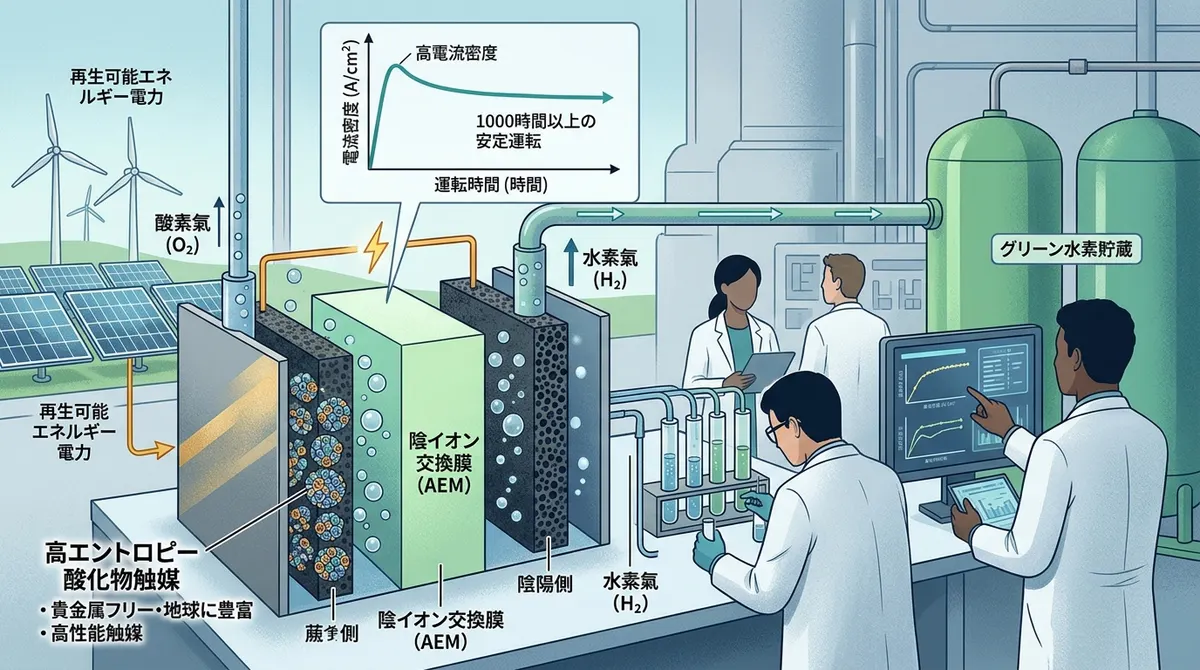
The research team said it developed an electrode catalyst made of high-entropy oxides composed of earth-abundant elements, without using precious metals, and verified its performance in anion exchange membrane (AEM) water electrolysis.
The key reported figures are as follows. The current density reached 1.33 amperes per square centimeter (1.33 A/cm²), and the system reportedly operated stably for 1,100 hours. Producing hydrogen through water electrolysis requires electricity, and if that power comes from renewable energy, the result is green hydrogen with reduced carbon dioxide emissions during production.
Water electrolysis systems are classified by electrolyte type, including alkaline water electrolysis, proton exchange membrane (PEM) water electrolysis and anion exchange membrane water electrolysis. PEM systems use large amounts of expensive precious metals, such as the platinum-group metal iridium, in their electrodes. AEM systems may be able to use relatively inexpensive materials, and reducing the use of precious metals is a key challenge for lowering costs.
Background
Hydrogen emits no carbon dioxide when burned, so it is expected to be a core energy carrier for decarbonization. However, the current mainstream production method is reforming fossil fuels, and green hydrogen, made by splitting water with electricity from renewable sources, faces cost challenges. Electrodes in water electrolysis equipment have traditionally used precious metals such as platinum and iridium. Developing catalysts that do not depend on scarce and expensive precious metals is one of the main lines of research aimed at lowering the cost of hydrogen production.
Source: Bioengineer.org
This article was written by the editors based on the cited report and translated from Japanese.
More news

TESS Group wins contract from Kokuei to install grid-scale battery storage facility
The project covers an approximately 8.3 MWh storage facility, and the group plans to provide aggregation services after equipment delivery.
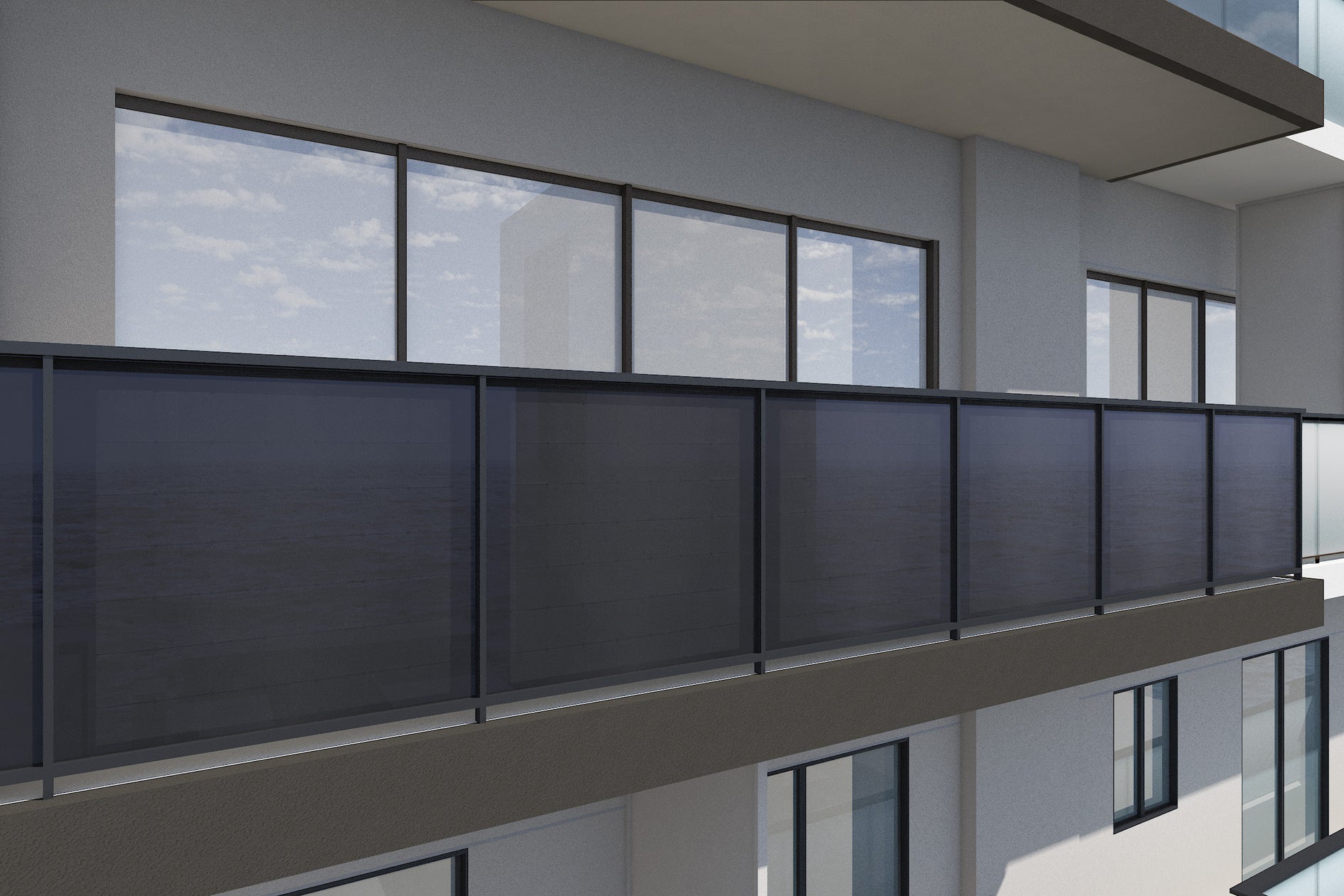
Haseko, Taisei and Kaneka develop balcony railing solar system for condominiums
Haseko plans to use the glass railing solar product at a condominium project in Shinagawa Ward developed in-house by Haseko.
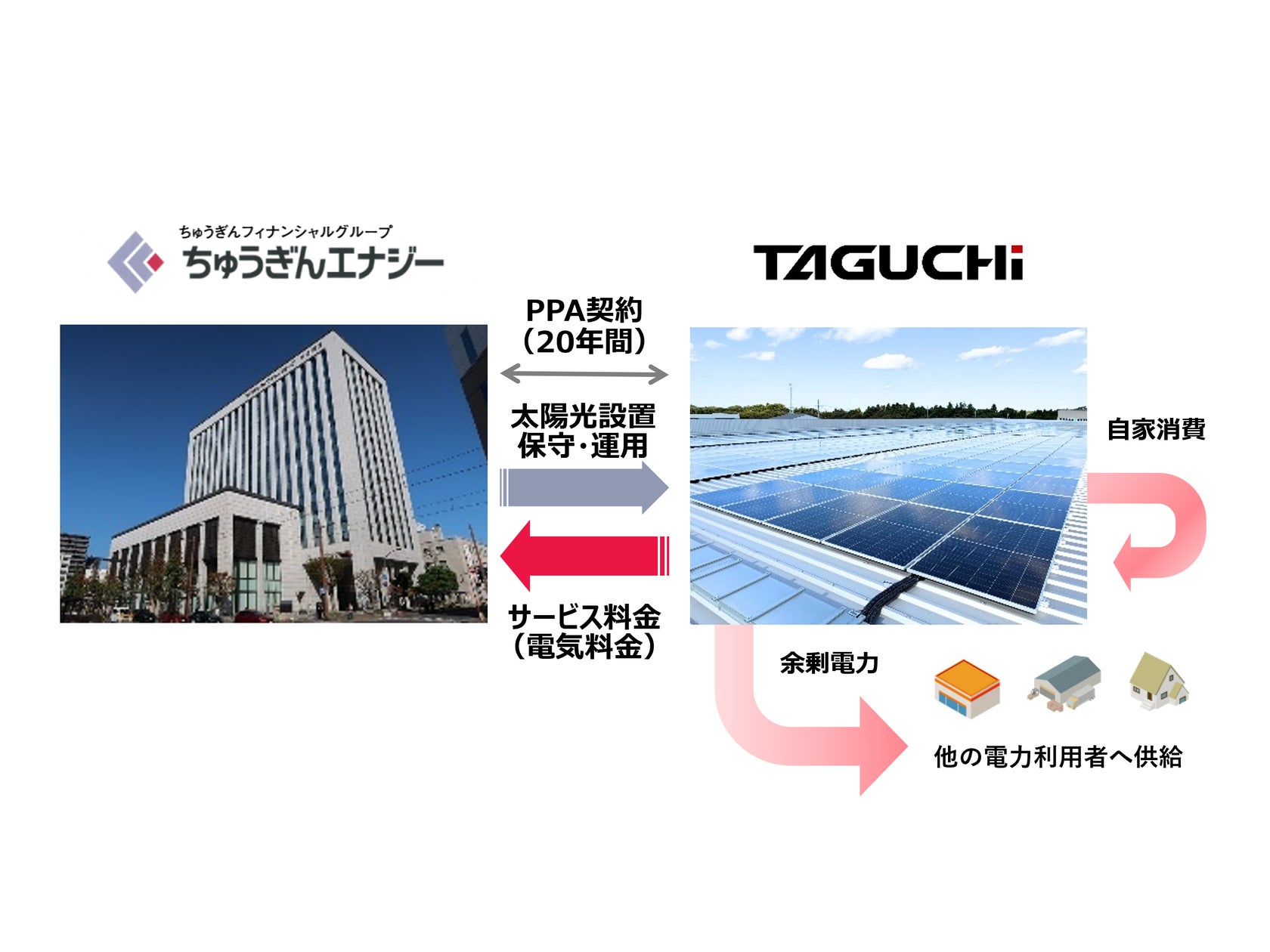
Taguchi Kogyo's Daisen plant begins renewable power supply via onsite solar PPA
Chugin Energy has installed solar power equipment on the roof of the plant of the construction machinery attachment maker to help decarbonize its electricity use.
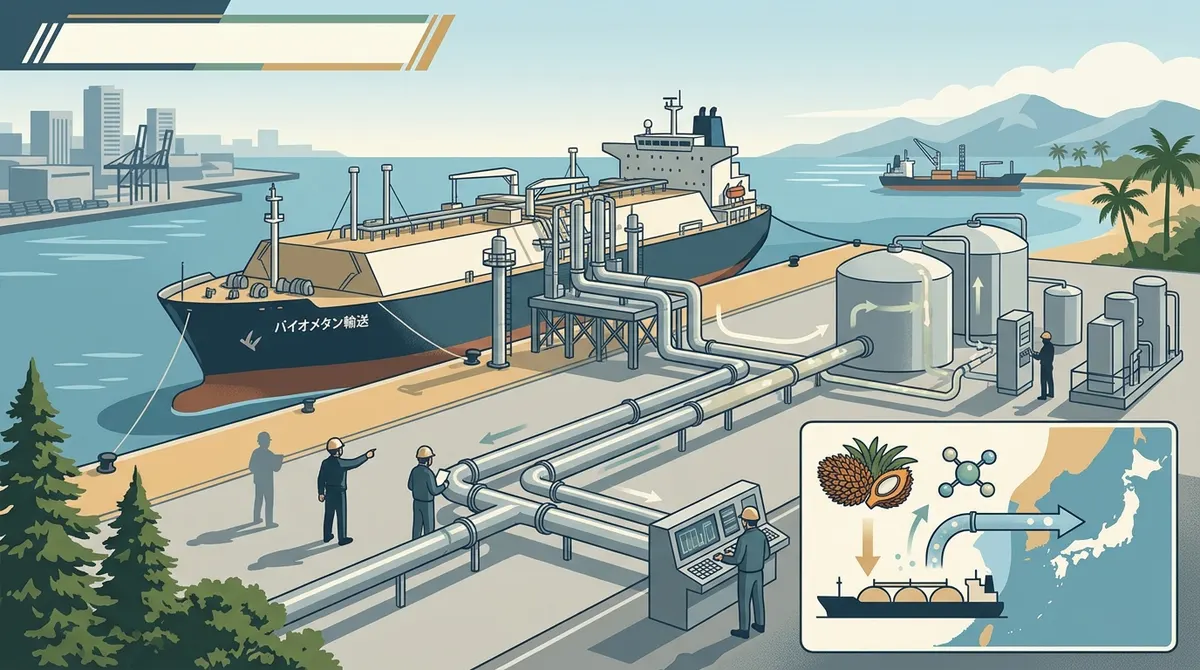
Tokyo Gas imports Malaysian biomethane into Japan for the first time
Tokyo Gas and Petronas jointly imported about 40,000 cubic meters of biomethane at the Ogishima LNG terminal, expanding Asian sourcing.