Sinopec to pipe green hydrogen 805 km from Inner Mongolia to Beijing-Tianjin
China Petroleum & Chemical Corporation (Sinopec) has formally launched its green hydrogen project in Ulanqab, planning a cross-provincial pure hydrogen pipeline to the Beijing-Tianjin area.
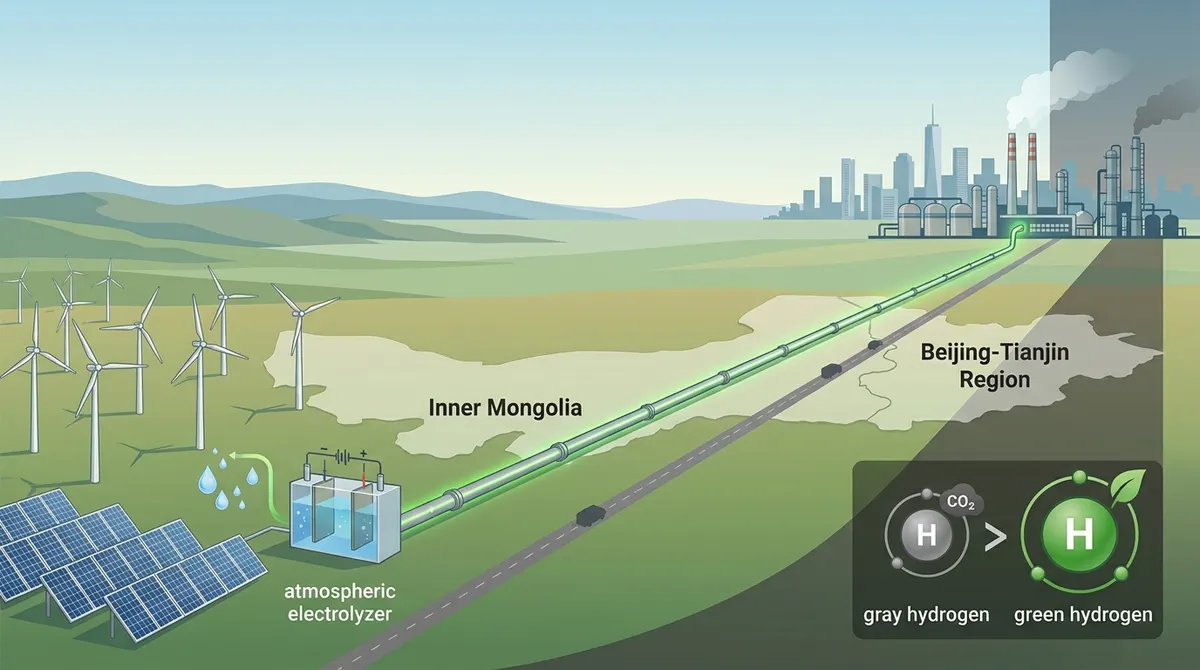
The project will proceed in two stages. The pipeline will be the first in China to transport pure hydrogen across provincial borders. It is positioned as China's first large-scale, long-distance hydrogen transport project.
Green hydrogen is hydrogen produced by electrolyzing water with electricity from renewable energy sources. By contrast, hydrogen made from fossil fuels is called gray hydrogen, and its production emits carbon dioxide. The project aims to replace gray hydrogen with green hydrogen.
Refineries have traditionally used large amounts of hydrogen in the process of refining petroleum. One goal of the project is to switch that hydrogen from gray to green. If receiving refineries accept green hydrogen, it would help reduce carbon emissions from refining.
Long-distance hydrogen transport is generally carried out by trucks moving it as compressed gas or by liquefying it. Pipelines can move large volumes of hydrogen at once, making them suitable for stable supply to urban areas with high demand. They can also support the expansion of industrial uses.
In electrolysis, electricity is passed through water to generate oxygen at the anode and hydrogen at the cathode. If the electricity used in production comes from renewable sources such as solar or wind power, carbon dioxide emissions during production approach zero. However, the amount and stability of electricity supply determine production volumes.
Hydrogen is used for power generation with fuel cells and as fuel for fuel cell vehicles, and it is also used as a raw material in the steel and chemical industries. As its uses expand, demand for large-scale infrastructure that integrates production and transport will also grow. The project is an example of how this industrial chain is widening.
Sinopec has accumulated experience in the hydrogen sector, and the project is an extension of that work. The company said new uses for hydrogen beyond refineries are expected to spread along the industrial chain.
Key points to watch include the progress of pipeline construction, the volume of green hydrogen produced, and how far its use expands at destination sites. The development of hydrogen infrastructure is seen as a key test of whether China can achieve both decarbonization and secure resource supplies.
Background
Hydrogen does not emit carbon dioxide when burned, so it is attracting attention worldwide as a pillar of decarbonization. It is classified by production method, and gray hydrogen, derived from fossil fuels such as natural gas, is still the mainstream. Hydrogen produced with electricity from renewable sources is called green hydrogen, and production in regions with surplus power generation is being considered. Because hydrogen is a gas with a large volume, methods such as high-pressure gas, liquefaction and pipelines are used depending on the distance. Pure hydrogen pipelines serve as a foundation for transporting hydrogen across wide areas, similar to natural gas pipeline networks, and building them is a challenge in many countries.
Source: Inspenet
This article was written by the editors based on the cited report and translated from Japanese.
More news

TESS Group wins contract from Kokuei to install grid-scale battery storage facility
The project covers an approximately 8.3 MWh storage facility, and the group plans to provide aggregation services after equipment delivery.

Haseko, Taisei and Kaneka develop balcony railing solar system for condominiums
Haseko plans to use the glass railing solar product at a condominium project in Shinagawa Ward developed in-house by Haseko.
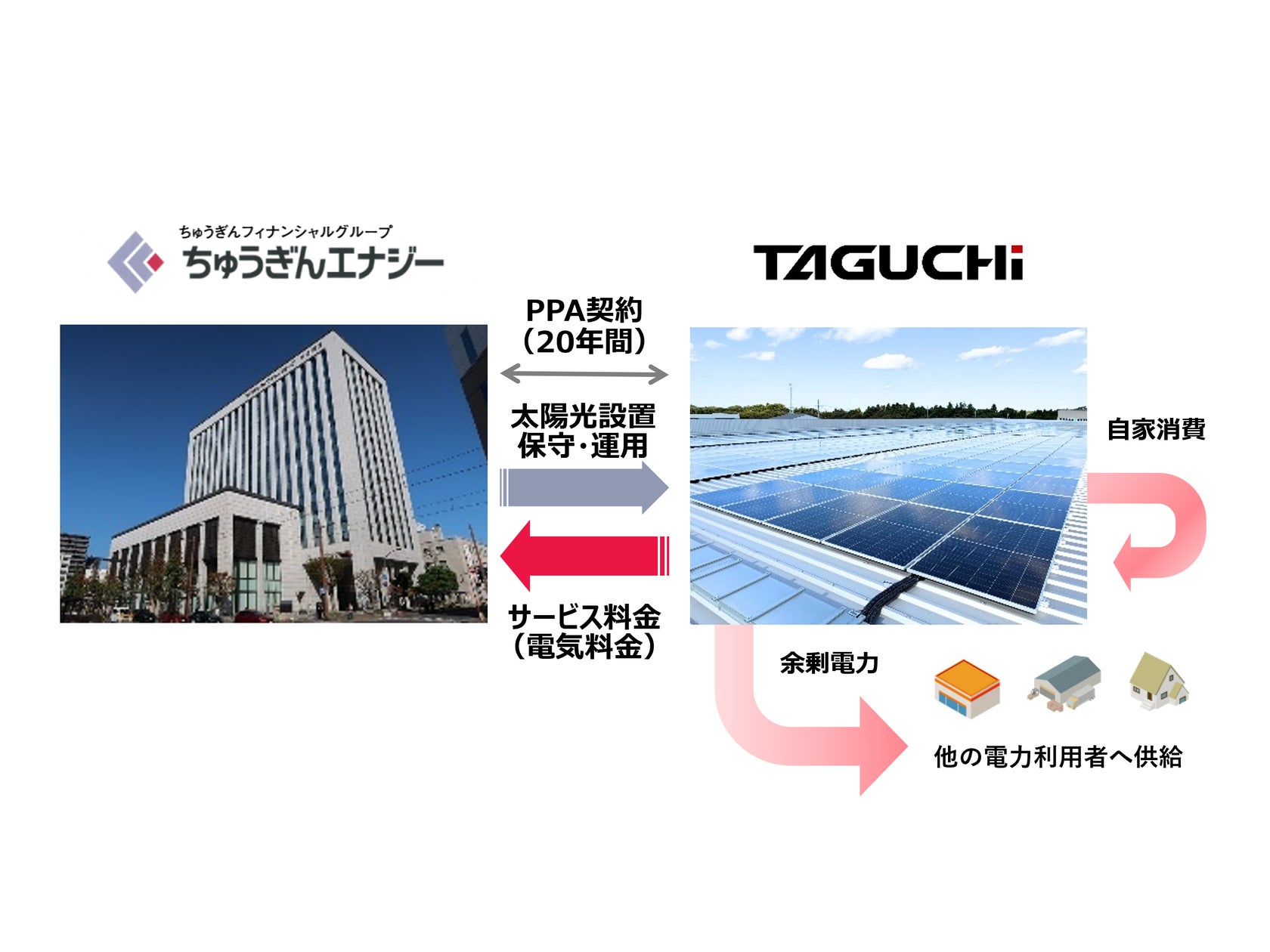
Taguchi Kogyo's Daisen plant begins renewable power supply via onsite solar PPA
Chugin Energy has installed solar power equipment on the roof of the plant of the construction machinery attachment maker to help decarbonize its electricity use.
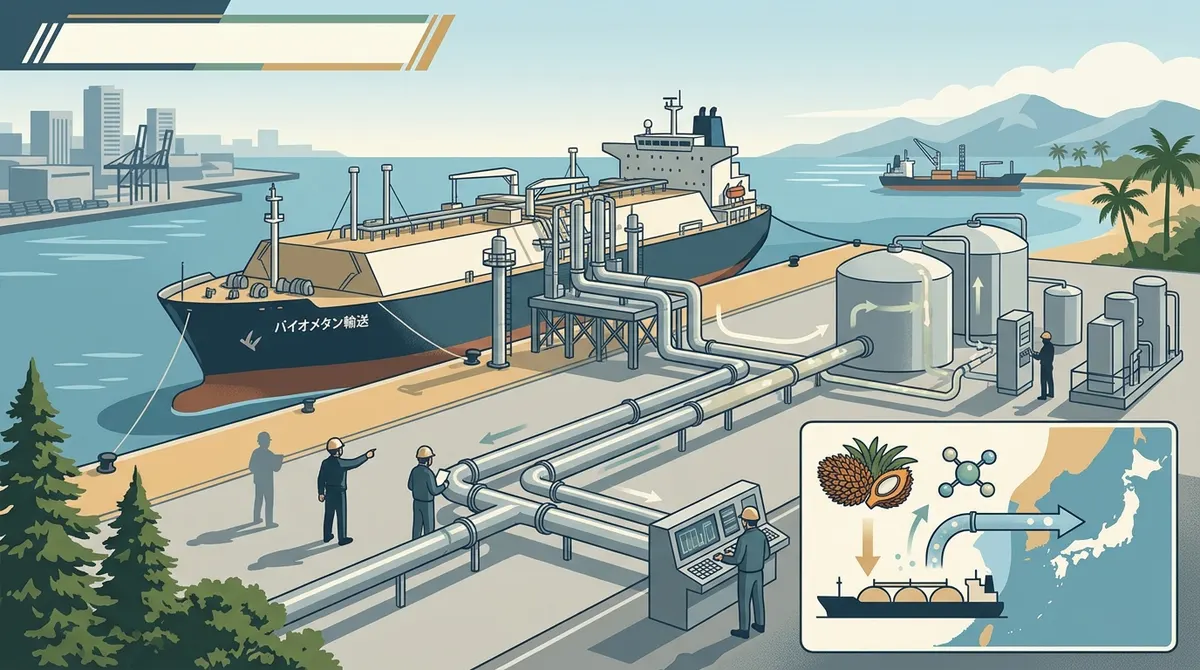
Tokyo Gas imports Malaysian biomethane into Japan for the first time
Tokyo Gas and Petronas jointly imported about 40,000 cubic meters of biomethane at the Ogishima LNG terminal, expanding Asian sourcing.