Choshu Industry starts mass production of thin tandem perovskite solar cells
Choshu Industry has begun mass production of tandem perovskite solar cells, a thin, lightweight and bendable next-generation technology.

Choshu Industry has started mass production of tandem perovskite solar cells. As a next-generation perovskite product, the cells are expected to provide a new supply source for the spread of solar power generation in Japan.
Perovskite solar cells use a material with a crystal structure known as perovskite in their power-generating layer. Because they are thin, lightweight and bendable, they are expected to be installed on building walls and on roofs with low load-bearing capacity, where conventional silicon solar cells have been difficult to install.
The tandem type combines a perovskite layer with an existing silicon-based solar cell. By absorbing light of different wavelengths in each layer, it is considered easier to raise power generation efficiency than with a single-layer structure.
With the start of mass production, Choshu Industry has moved to treat tandem products as a formal supply item within its production system. Specific figures such as output and production volume have not been disclosed.
Commercialization of perovskite solar cells in Japan has been challenged by the need to stabilize manufacturing technology and ensure durability. The start of mass production is an important stage for confirming whether the cells can be made while maintaining performance and quality.
Next, attention will focus on which applications and markets the products will be introduced to. Whether the cells can take advantage of their fewer installation constraints is seen as a factor that will determine how quickly they spread.
BLUE NOVA Hydrogen Journal view
Perovskite solar cells are a next-generation technology that widens the options for installation sites thanks to their thinness and light weight. In Japan, adoption has lagged in buildings that cannot easily support heavy silicon solar panels, so the technology has been seen as a way to fill that gap. The tandem type aims to improve efficiency by combining existing technologies, and the start of mass production is a step toward practical use. Going forward, the success of adoption will depend on evaluations of the product, including durability and price competitiveness.
Source: 電気新聞ウェブサイト
This article was written by the editors based on the cited report and translated from Japanese. AI is used to assist in writing and translation.
More news

Asuene to Support CO2 Emissions Calculations for Osaka Marathon 2027 Event
Asuene has signed a sustainability partnership with the Osaka Marathon Foundation to measure CO2 emissions before and after the February 28, 2027, race.
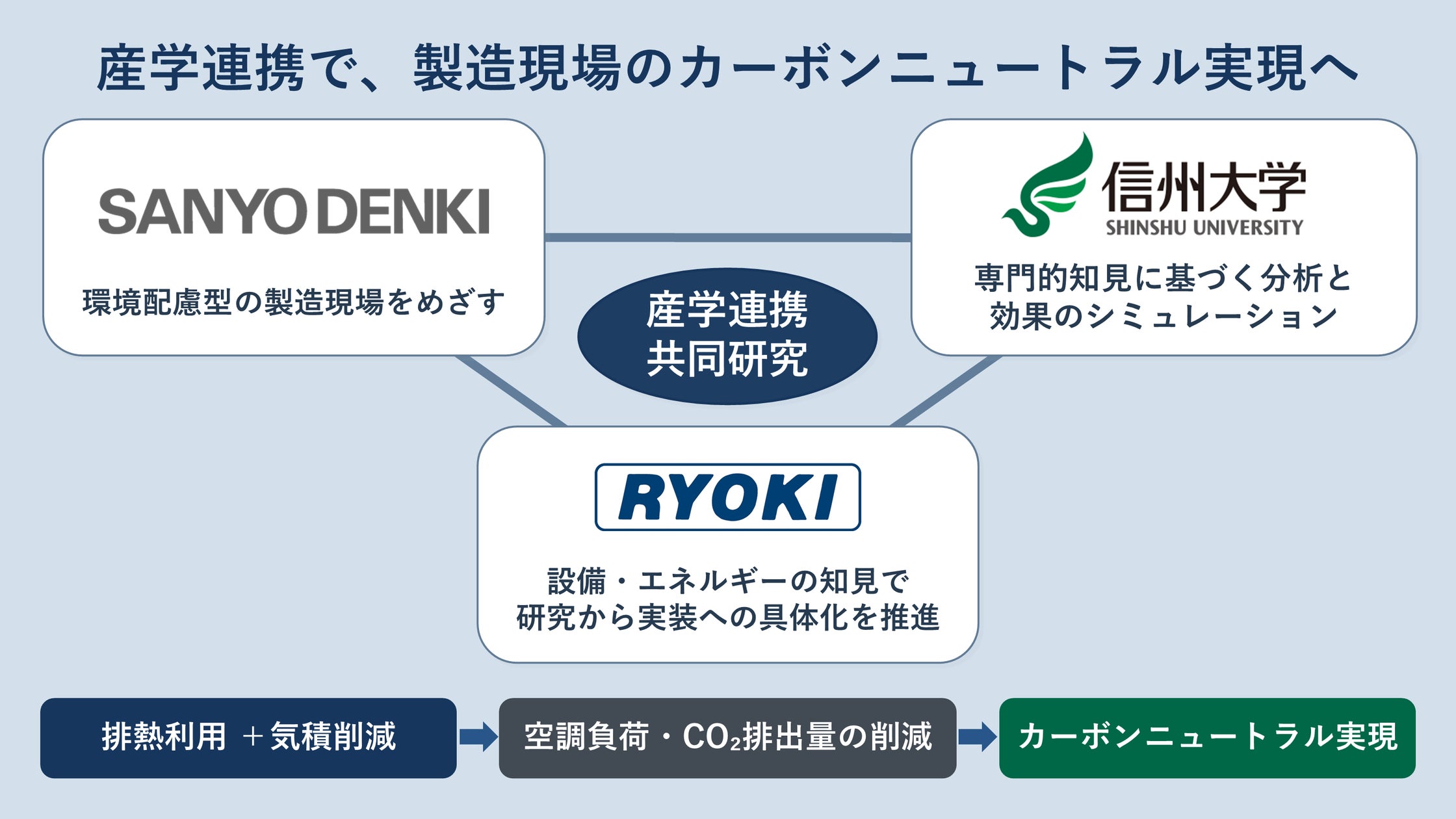
Sanyo Denki Factory Tests Waste Heat Reuse and Air Volume Cuts in Joint Study
Ryoki Kogyo said its joint study with Shinshu University and Sanyo Denki examined waste heat and unused space at a factory in Ueda through field measurements and analysis.

Kose Holdings outlines plan to use green hydrogen to decarbonize cosmetics manufacturing
Kose Holdings said it will use green hydrogen in cosmetics production as part of its drive to cut emissions in manufacturing.

Florence biogas plant joins gas grid, targeting 6.5 million cubic meters of biomethane
Plures' Casa Sartori plant has been connected to Snam's gas network and aims to produce 6.5 million cubic meters of biomethane by 2026.