Hokkaido Gas and Kitahiroshima team up to decarbonize city gas with sewage biogas
The partnership aims to supply city gas with virtually zero CO2 emissions by using environmental value from biogas produced at sewage treatment facilities.
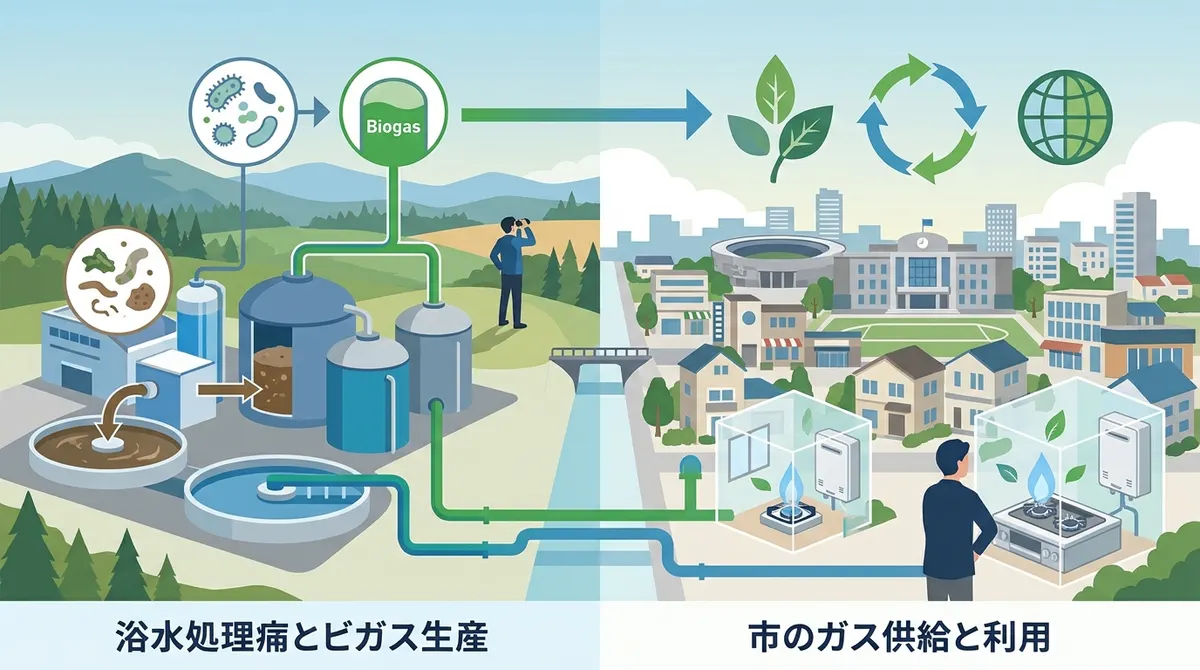
Hokkaido Gas Co., Ltd. and the city of Kitahiroshima have signed a partnership agreement. The initiative aims to supply city gas with virtually zero CO2 emissions by using the environmental value of biogas produced at sewage treatment facilities. The project is notable for showing a direction in which the entire city pursues decarbonization, with a city gas provider and a local government working together to make use of local resources.
At the core of the agreement is biogas generated at sewage treatment facilities. Biogas refers to gas mainly composed of methane that is produced when food waste and livestock manure are fermented by microorganisms. Similar gas is also generated in the process of treating sewage sludge, and there are examples in Japan and abroad of collecting it for use as fuel. The agreement aims to link this gas to decarbonizing city gas.
Environmental value refers to the idea of treating the greenhouse gas reduction achieved by using renewable gas as a certificate separate from the gas itself. Because city gas is physically delivered through pipelines, users cannot distinguish whether the gas they use is of renewable origin. Therefore, a mechanism works by issuing certificates that show the origin of the biogas and assigning their value to customers, so that emissions during use are regarded as virtually zero.
Virtually zero CO2 emissions means that net emissions become zero after being offset by an equivalent amount of reductions or certificates. City gas itself is derived from natural gas, so the use of fossil fuels remains. For this reason, converting biogas into certificates is attracting attention as a way to raise the share of renewable gas. To prevent double counting of certificates, it is essential to manage them so that the same value is not used by multiple parties.
The key points to watch are the timing of future supply, the range of customers covered, and specific measures for handling the certificates. The agreement sets out the framework for cooperation, and the actual supply volume and emissions reductions are expected to be revealed in future announcements. By following announcements from those involved, it will be possible to judge the scale at which the plan is realized.
BLUE NOVA Hydrogen Journal view
This agreement is significant in that it links biogas from sewage treatment, a familiar facility, to decarbonizing city gas. When a municipality and a city gas provider work together, a cycle forms in which local resources return to local energy supply. The phrase virtually zero CO2 emissions assumes a system in which environmental value is transferred through certificates, so it is necessary to check which emissions are covered and how they are treated. As a way to raise the share of renewable gas while using existing city gas networks, its application in other regions will also draw attention.
Source: TBS NEWS DIG
This article was written by the editors based on the cited report and translated from Japanese. AI is used to assist in writing and translation.
More news

Study uses platinum-based quaternary alloy catalyst to cut green hydrogen costs
Researchers are testing electrolytic reforming of ethanol with a platinum-based quaternary alloy catalyst to lower the cost of producing green hydrogen.
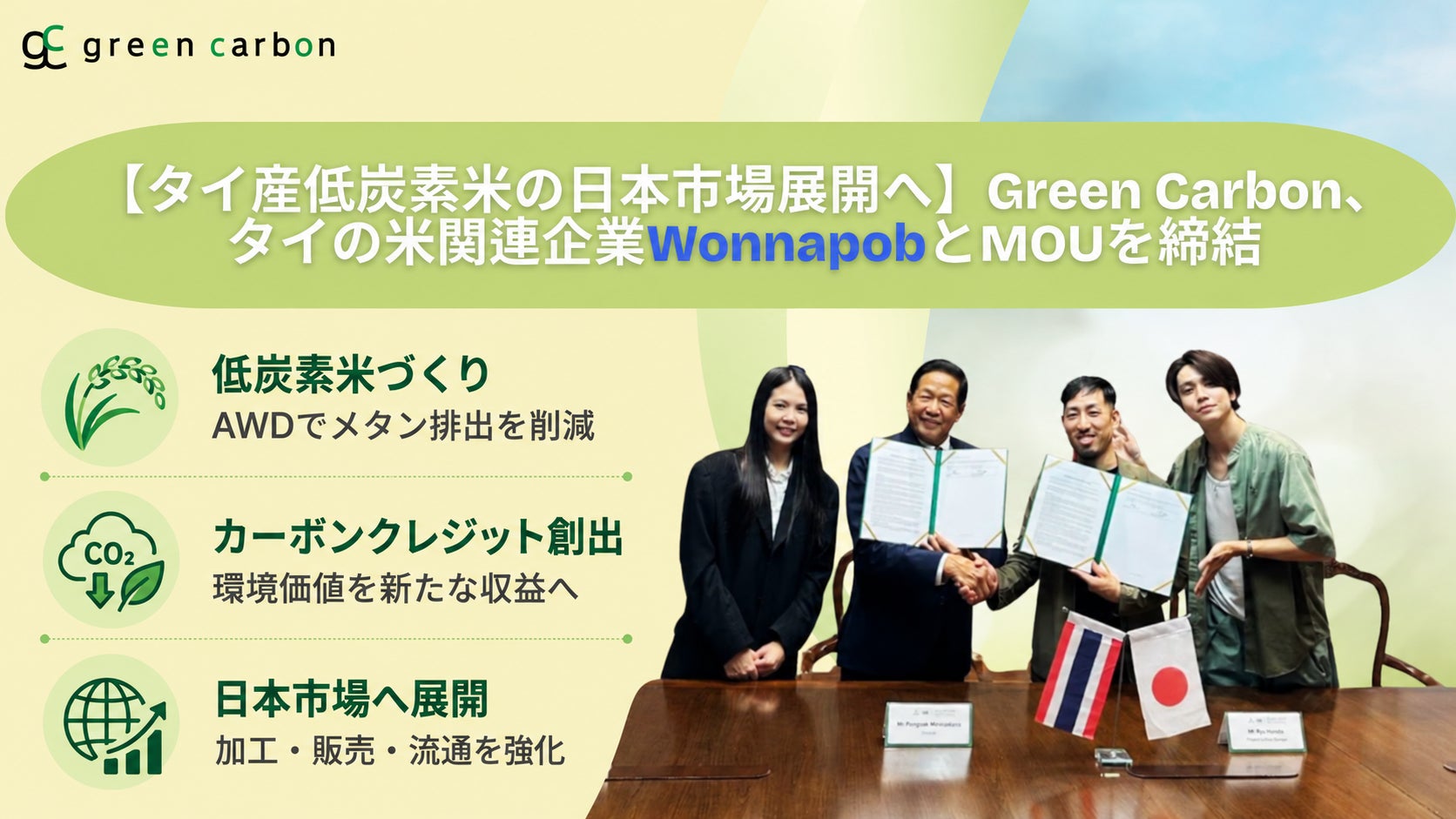
Green Carbon signs MOU with Thai rice firm on low-carbon rice and emission credits
Green Carbon Co., Ltd. has signed a memorandum of understanding with Thai rice processor and exporter Wonnapob Co., Ltd. to combine paddy methane reduction with rice sales.

Tokyu Power Supply links 457 home batteries for first demand-reduction discharge in the TEPCO service area
Tokyu Power Supply remotely controlled 457 household batteries to deliver 787.5 kWh of demand-reduction discharge during a nationwide power supply crunch on October 21, 2026.

Panasonic to mass-produce next-generation perovskite solar cells in fiscal 2029
The company plans full-scale production of the thin, flexible panels for installation on building windows and other surfaces.