Green Carbon signs MOU with Thai rice firm on low-carbon rice and emission credits
Green Carbon Co., Ltd. has signed a memorandum of understanding with Thai rice processor and exporter Wonnapob Co., Ltd. to combine paddy methane reduction with rice sales.
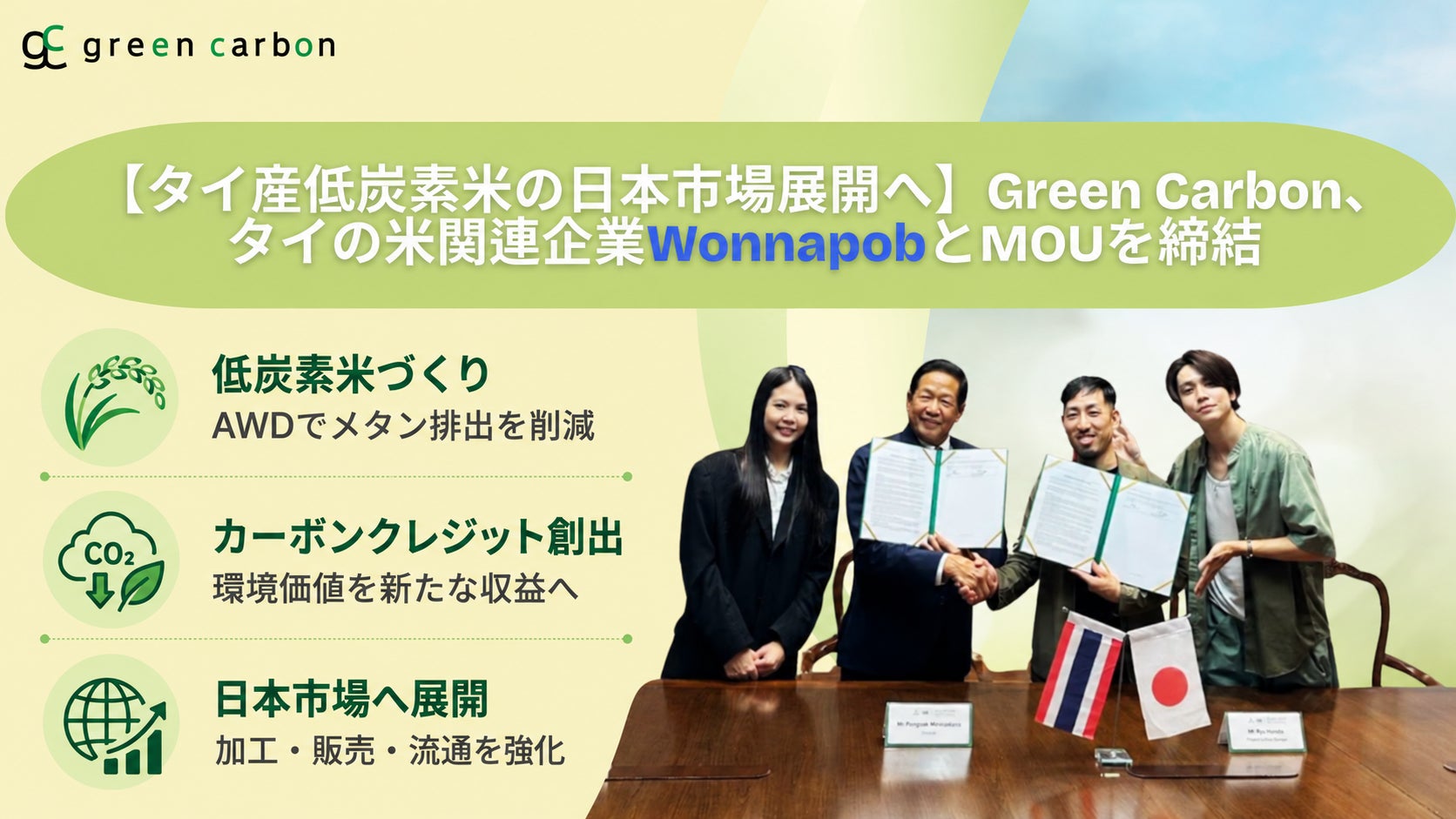
On October 23, 2026, Green Carbon Co., Ltd., Tokyo-based operator of Japan's largest nature-based carbon credit business, announced that it has signed a memorandum of understanding with Thai rice processor and exporter Wonnapob Co., Ltd. The agreement covers the production and sale of low-carbon rice and the creation of carbon credits. The aim is to build a new system for delivering environmentally conscious rice produced in Thailand to overseas markets, including Japan.
The partnership is built on combining Green Carbon's efforts to reduce methane emissions from paddy fields with Wonnapob's expertise in processing, distribution and export of rice. Methane is known to be released easily from flooded paddies, where soil microbes break down organic matter. Changing water management is considered one of the main ways to curb these emissions. Measuring the reductions and turning them into units that can be traded as credits is the starting point of the project.
Carbon credits are units that represent emission reductions or removals and can be bought and sold. They are used by companies that cannot fully cut their own emissions to offset them by purchasing reductions achieved by others. The announcement indicated a plan to build a business model that combines low-carbon rice sales with credit creation. A distinctive feature is linking a familiar food, rice, with reductions that are hard to see.
The MOU also includes a plan to explore collaboration on CO2 removal methods using enhanced rock weathering (ERW) and biochar. ERW involves spreading crushed rock on farmland so that natural weathering takes CO2 from the air into soil and water. Biochar is charcoal made by heating biomass in a low-oxygen environment, and it can keep carbon in soil for long periods. Both methods are drawing attention as ways to remove CO2 using farmland.
The companies say they will promote sustainable agriculture and build new business models through these approaches. Making emission reductions in agriculture commercially viable is difficult. Measuring and reporting reductions takes effort, and securing income that keeps farmers engaged is often a challenge. Linking the program to rice sales could be one answer to this problem.
The announcement only confirmed that the two companies have signed a memorandum on the direction of their partnership. No specific figures were disclosed for low-carbon rice sales volumes, credit volumes or start dates. Going forward, attention will focus on which paddies will be used to calculate reductions and where Thai low-carbon rice will be sold. Green Carbon has also opened an inquiry channel for those interested in moving the partnership forward.
BLUE NOVA Hydrogen Journal view
This MOU is significant because it seeks to combine emission reductions in agriculture, specifically methane cuts in paddy fields, with a distribution system for processing and exporting rice. Carbon credits have been used as a tool to show reductions in numerical terms and trade them, but reductions from farming are often hard to create and measure. Tying them to rice sales could give farmers and businesses more reasons to keep participating. However, without disclosed sales or credit volumes, it is too early to judge whether the business will be viable. Details on calculation methods and sales channels will be key to watch.
Source: PR TIMES
This article was written by the editors based on the cited report and translated from Japanese. AI is used to assist in writing and translation.
More news

Study uses platinum-based quaternary alloy catalyst to cut green hydrogen costs
Researchers are testing electrolytic reforming of ethanol with a platinum-based quaternary alloy catalyst to lower the cost of producing green hydrogen.
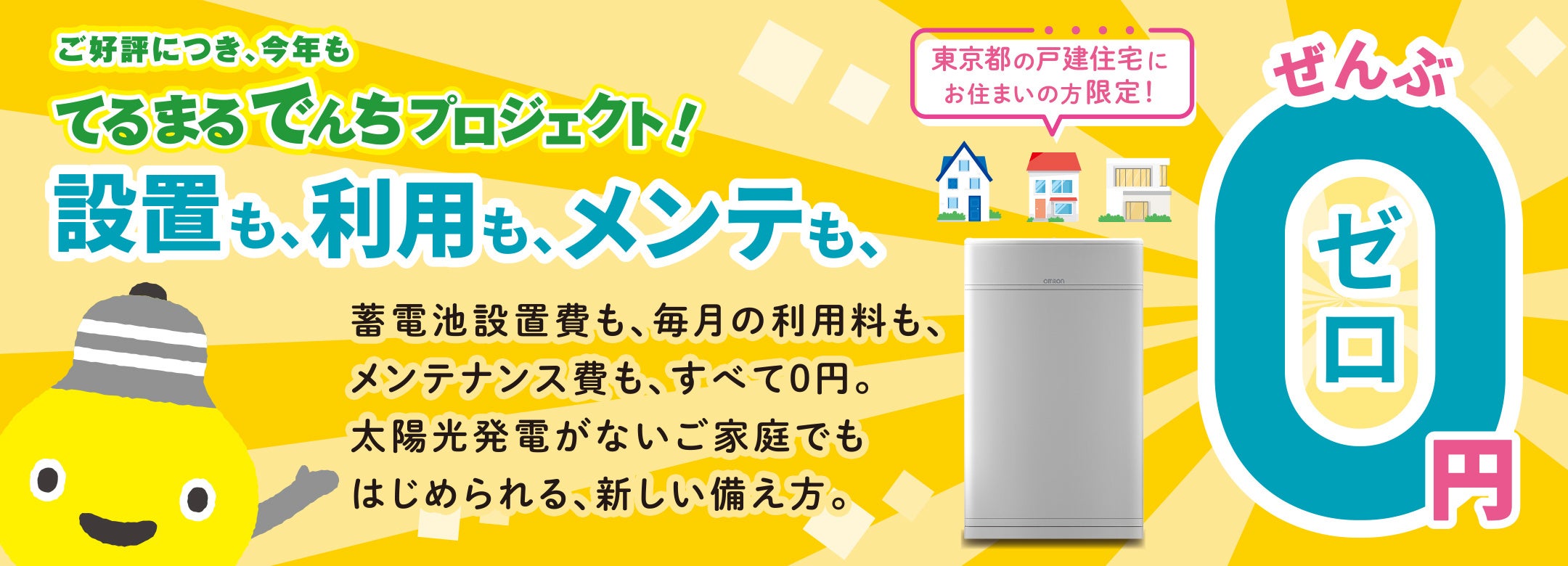
Tokyu Power Supply links 457 home batteries for first demand-reduction discharge in the TEPCO service area
Tokyu Power Supply remotely controlled 457 household batteries to deliver 787.5 kWh of demand-reduction discharge during a nationwide power supply crunch on October 21, 2026.

Panasonic to mass-produce next-generation perovskite solar cells in fiscal 2029
The company plans full-scale production of the thin, flexible panels for installation on building windows and other surfaces.

New report says CCS policy design sidelines biomethane-based carbon removal
A new report says rules centered on carbon capture and storage do not adequately address carbon removal using biomethane.