Lister launches database of firms tied to perovskite solar cell supply chain
The database lists companies and their products and services across manufacturing equipment, materials, construction and maintenance.
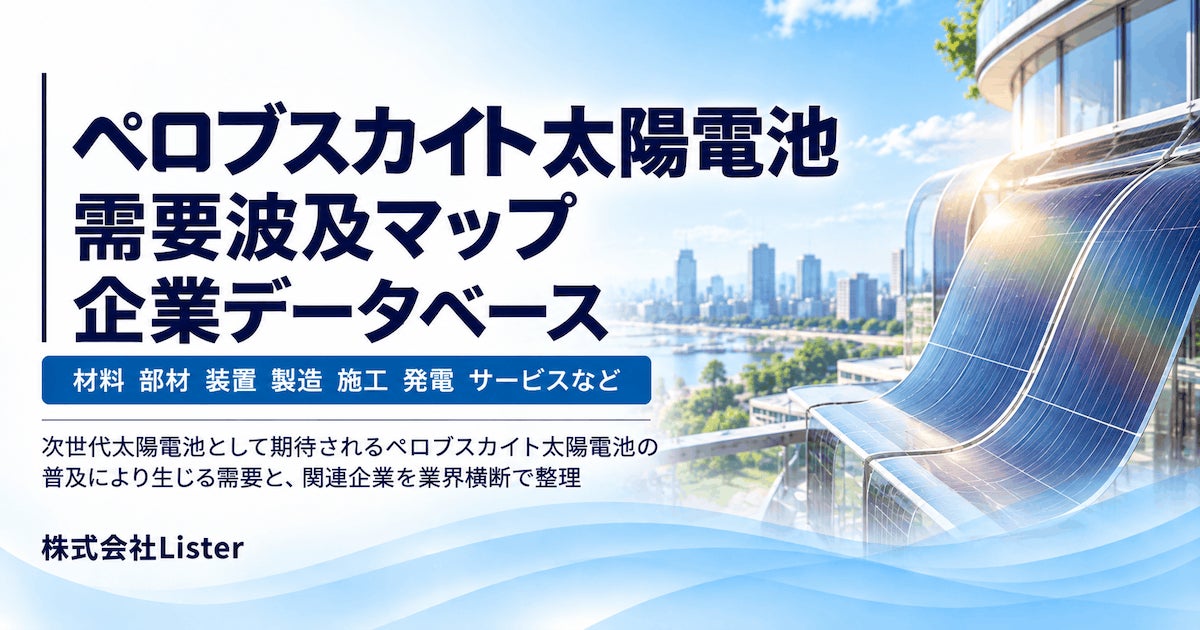
Lister Inc. announced on Nov. 17, 2026, that it has launched formal access to its "Perovskite Solar Cell Demand Ripple Map and Company Database." The company, which operates industrial databases focused on the manufacturing sector, has compiled a list of companies related to next-generation solar cells.
The database organizes companies involved in the research, development, mass production, installation and operation of perovskite solar cells, along with the specific products and services each company provides. It covers a wide range of businesses, including makers of film-type, glass-type and tandem-type solar cells, as well as suppliers of raw materials and components, manufacturing equipment, factory facilities, precision processing, building materials, installation work, power equipment, testing and evaluation, and maintenance and recycling.
Perovskite solar cells are next-generation cells that are thin, lightweight and can be bent. They are expected to be installed on rooftops and walls of buildings where conventional silicon solar cells have been difficult to install. In Japan, development of film-type and glass-type products is advancing, and efforts are also underway to mass-produce tandem-type cells that combine perovskite with silicon solar cells.
Mass production and wider adoption of these products involve many companies beyond solar cell manufacturers. For example, setting up a mass-production plant requires film-forming, coating and printing equipment, as well as drying facilities. The company says that presenting the spread of these related industries on a map will help businesses find trading partners.
The database is published on a dedicated website and is structured as a demand ripple map that allows users to grasp the overall industry picture. Its key feature is that companies considering new entry into manufacturing or developing business partners can check the locations and business details of related firms at once.
The spread of solar cells depends on whether supply networks for manufacturing equipment and components are in place. A thicker layer of related companies could make it easier to start mass production and secure installation workers. However, which companies actually take part in mass production is left to each firm's decision, and the database is a list of company information rather than an indication of whether any business will succeed.
The database is one of the company's efforts to turn corporate information in the manufacturing sector into data that can be used for decision-making. The company is expected to continue expanding and updating the listed firms, and the database may also be referred to as a gauge of how far the industrialization of perovskite solar cells has progressed.
Background
Perovskite solar cells are next-generation cells that are thinner and lighter than silicon solar cells and can be bent. Conventional silicon cells are heavy and rigid, making them difficult to install on rooftops and walls that cannot bear much weight. Film-type cells using perovskite materials are being researched and prepared for mass production as a candidate to address this weakness. In Japan, alongside development of film-type and glass-type products, efforts are underway to mass-produce tandem-type cells that are layered on existing silicon cells. Solar power involves many companies, including makers of manufacturing equipment, materials, installation and maintenance, so building supply networks across related industries is essential for wider adoption.
Source: 株式会社Lister
This article was written by the editors based on the cited report and translated from Japanese.
More news

Beppu geothermal binary plant signs EPC deal and begins construction
Intelect will handle design, procurement and construction for BLD Power Stations' geothermal power project in Beppu, Oita Prefecture.
Tensor Cloud Adopted by Orix for Solar Power Output Forecasting and Notification Operations
Tensor Energy's platform is being used to forecast output and handle notification work at some of Orix's solar power plants.
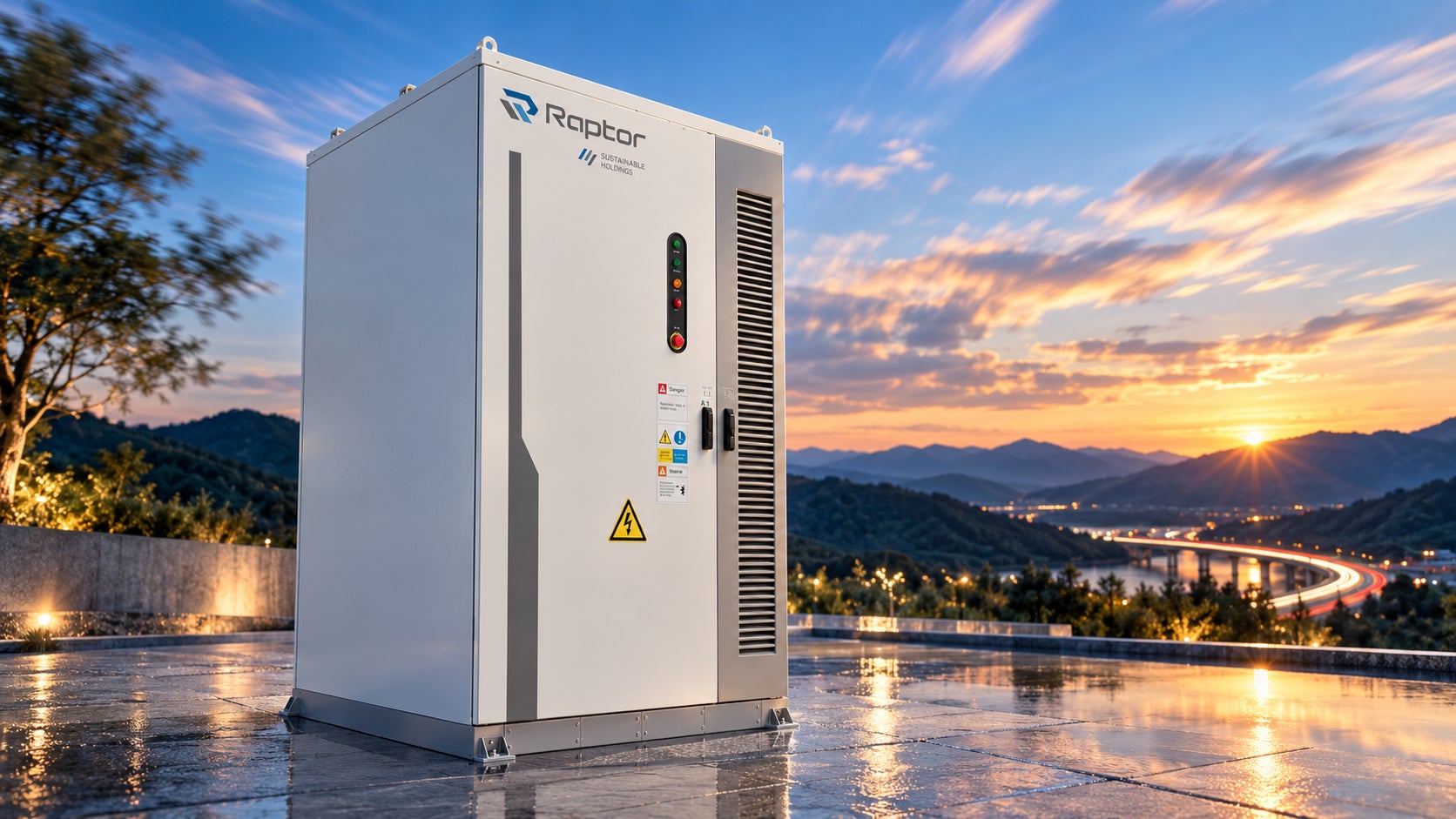
Sustainable Holdings advances business succession of Matsumoto grid-scale battery project toward November 2027 grid connection
Sustainable Holdings said it is moving to advance business succession for the Matsumoto project and file grid connection applications, targeting a Nov. 30, 2027 connection.

Learning from local wisdom: decarbonization as culture and coexistence with Japan's nature
Technology and numerical targets alone fail to close the gap with daily life, so a perspective is presented to rethink decarbonization through local context.