PowerX, Kansai Transmission & Distribution Co., Inc. agree on battery-based grid connection
PowerX and Kansai Transmission and Distribution signed a basic agreement on a new grid connection and facility development method using storage batteries, the companies announced on October 30, 2026.

PowerX (securities code 485A) said on October 30, 2026, in a timely disclosure that it had signed a basic agreement with Kansai Transmission & Distribution Co., Inc. on a new method for grid connection and facility development using storage batteries. The two companies will work on a new approach that combines batteries to advance connections to the transmission and distribution network and the development of facilities.
Grid connection refers to connecting power plants or storage facilities to a utility's transmission and distribution network, known as the grid. The capacity that the network can accept is limited, and when capacity runs short, connections may face waiting periods or require reinforcement work on substations and transmission equipment. In Japan, as the adoption of renewable energy has spread, grid congestion has become an issue in some regions.
Batteries can be charged when electricity is in surplus and discharged during periods of high demand. By controlling this charging and discharging, the flow of power can be adjusted so that existing grid capacity is used more effectively. For this reason, batteries are attracting attention as a means of adding power sources that can connect without waiting for grid reinforcement.
A basic agreement is generally a preliminary agreement reached before a formal contract or the concrete development of an individual project. Going forward, the two companies will consider facility layout, connection conditions, and operating methods, moving into a stage in which these are turned into individual plans.
What stands out in this initiative is the specific way in which batteries are built into the power grid as a means of adjusting supply and demand. Key points going forward will be which regions and what scale of facilities are considered, and how connection procedures and cost sharing will be organized.
BLUE NOVA Hydrogen Journal view
The basic agreement can be read as a move to build batteries into the grid connection framework. As renewable energy adoption advances, limited capacity in transmission and distribution networks has led to longer waiting times for connections. If batteries can change how existing grids are used, it may be possible to add power sources without waiting for reinforcement work. However, a basic agreement is not a final contract, so the effects will depend on how the plans take shape.
Source: 日本経済新聞
This article was written by the editors based on the cited report and translated from Japanese. AI is used to assist in writing and translation.
More news

Used PCs to Be Recycled into Medals for the Osaka Marathon 2027
Linet Japan Group and its partners have announced a plan to collect unwanted household computers and turn them into gold, silver and bronze medals for the Osaka Marathon 2027.

Obayashi and others develop system making hydrogen on building rooftops for power generation
Obayashi Corporation and its partners unveiled a system that produces hydrogen on a building's roof, stores it in hydrogen-absorbing alloys and uses it to generate electricity.
Asuene to Support CO2 Emissions Calculations for Osaka Marathon 2027 Event
Asuene has signed a sustainability partnership with the Osaka Marathon Foundation to measure CO2 emissions before and after the February 28, 2027, race.
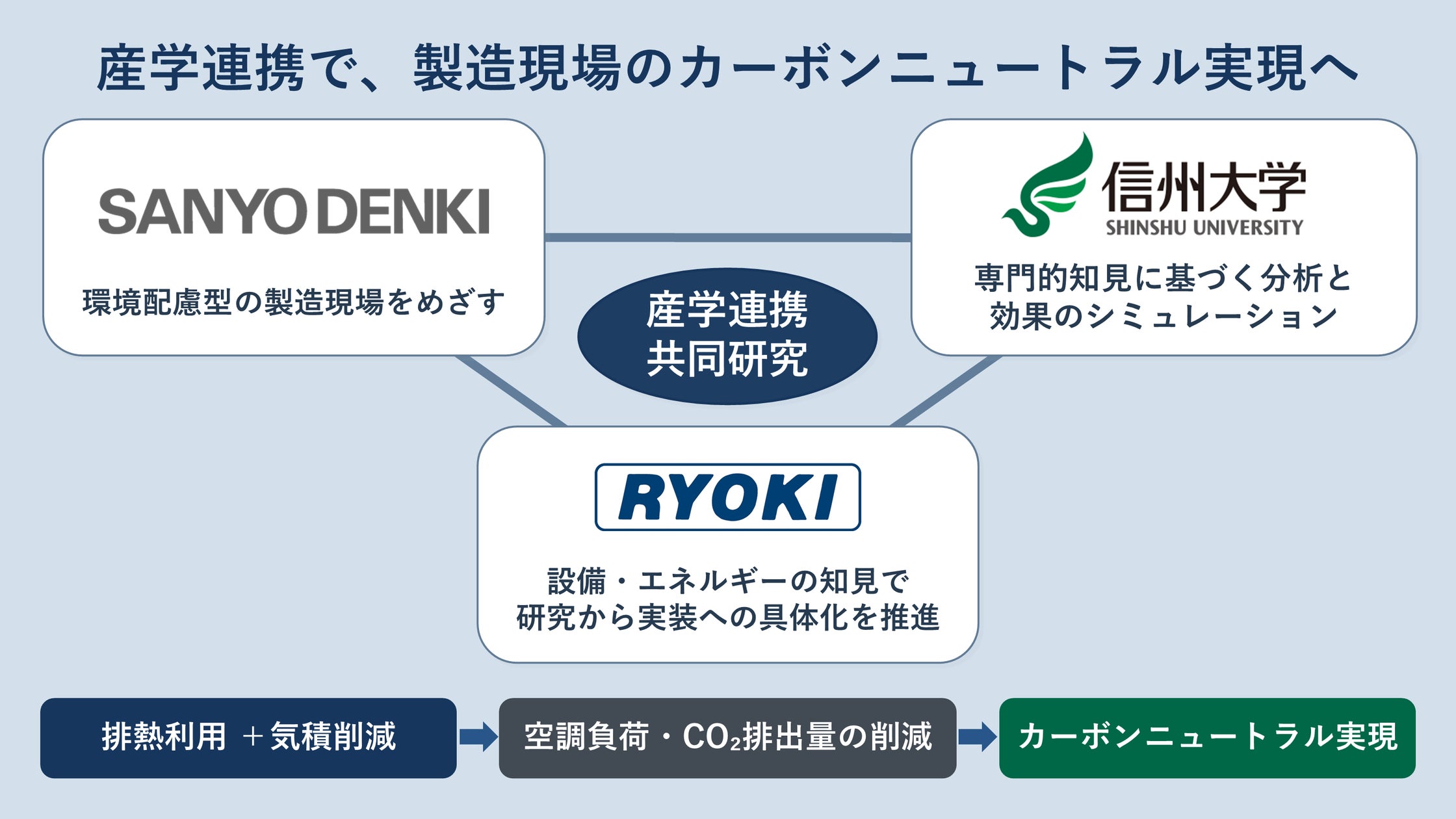
Sanyo Denki Factory Tests Waste Heat Reuse and Air Volume Cuts in Joint Study
Ryoki Kogyo said its joint study with Shinshu University and Sanyo Denki examined waste heat and unused space at a factory in Ueda through field measurements and analysis.