Digital Grid holds RE Bridge workshop on corporate renewable power purchasing
About 110 participants attended the second RE Bridge workshop in Tokyo, where discussions focused on revisions to the GHG Protocol and the cost trends of new power plants.
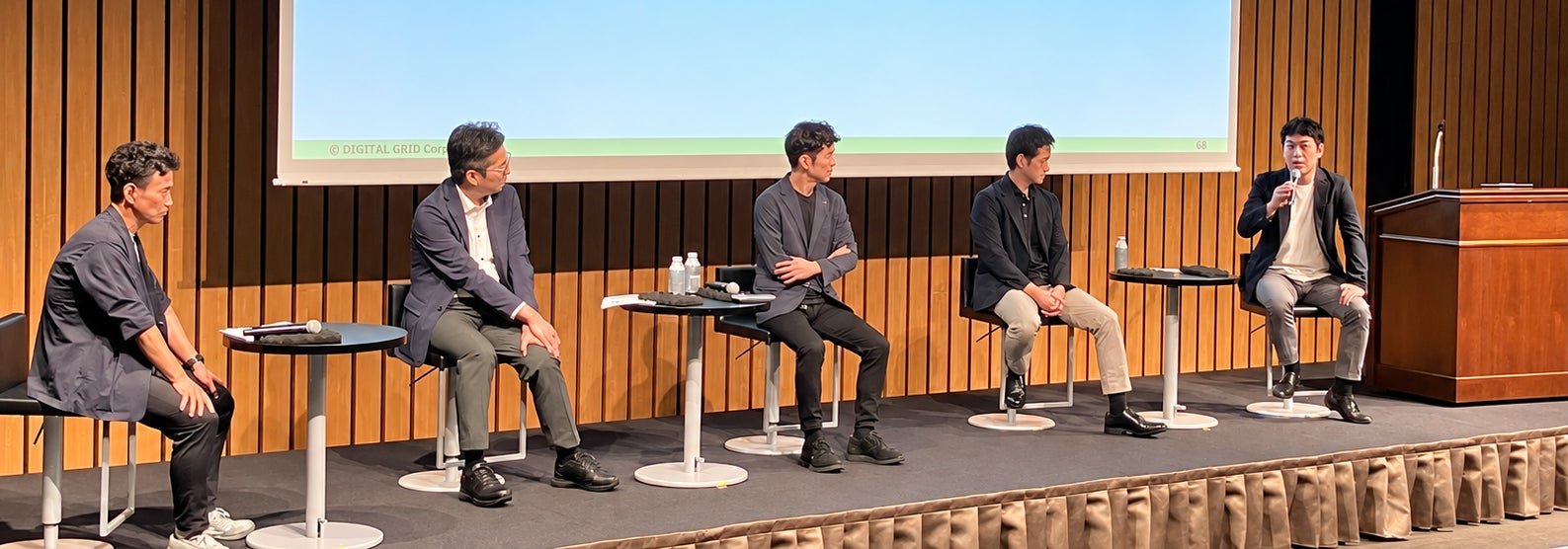
On October 13, 2026, Digital Grid Inc., headquartered in Minato, Tokyo, held the second RE Bridge workshop on off-site PPAs for members only in Tokyo. The company announced the event in a press release on October 26. About 110 people, including corporate power procurement and renewable energy staff, attended.
The environment surrounding corporate power procurement is changing, including electricity price swings linked to the situation in the Middle East and discussions on revising the GHG Protocol, the standard for calculating greenhouse gas emissions. The workshop was set up as a forum to consider how companies should procure renewable energy in light of these changes.
The GHG Protocol is the most widely used international standard for calculating and reporting greenhouse gas emissions by companies and other organizations. Masaya Ishida, director of research at the Renewable Energy Foundation, who spoke at the event, said the final draft would be delayed by one year and is now expected to be compiled in 2028. He explained the revisions and key issues, and described how they could affect the power procurement methods now in wide use.
A PPA is a long-term contract under which a power producer and a consumer buy and sell electricity. It is used by companies that do not own power plants to procure renewable electricity from external facilities. The workshop focused on off-site PPAs, in which electricity is purchased from plants built outside a company's own premises.
Companies can procure renewable power by installing equipment on their own sites, buying electricity from power plants through PPAs, or purchasing renewable energy certificates. The choice depends on cost, timing of introduction and how emissions are treated in calculations. Under the GHG Protocol, emissions associated with electricity use are classified as Scope 2.
Participants discussed how renewable energy procurement staff had explained the issues within their own companies and gained understanding, as well as the criteria used when selecting power plants. Keita Kosugi, who handles companies adopting renewable energy at Digital Grid, said newly built power plants tend to cost more than existing ones.
In a group discussion involving all participants, the group considered questions such as whether they were concerned about the revisions to the GHG Protocol. Power producers and companies that buy electricity exchanged lively views while sharing their circumstances. Bringing generators and consumers together in the same forum was meaningful for both sides in understanding the realities of procurement.
The key points to watch are how the GHG Protocol revisions will be finalized and how they will affect the way companies procure renewable energy. The final draft is expected to be completed in 2028, and in the meantime companies will need to consider their procurement options and how to explain them internally.
BLUE NOVA Hydrogen Journal view
Companies are being pressed to review how they buy renewable electricity as systems and international standards change. The workshop stood out because both buyers using PPAs and power producers checked the impact of the revisions and the cost structure in the same forum. Revisions to the GHG Protocol bear directly on emissions calculations and reporting, which makes them a factor that shapes contract terms and how companies choose power plants for procurement staff. The tendency for new plants to cost more than existing ones is also likely to influence pricing in long-term contracts. Until the final draft is completed in 2028, the key question will be which procurement methods companies choose and how they build internal support.
Source: PR TIMES
This article was written by the editors based on the cited report and translated from Japanese. AI is used to assist in writing and translation.
More news

J-Power and JGX launch C app app to reward decarbonizing actions with social credits
The app lets users earn points for eco-friendly activities that can be exchanged for goods, services or J-Credits.

Ricoh begins building production system for inkjet-printed perovskite solar cells
Ricoh has started setting up a production system for thin, lightweight next-generation solar cells using inkjet technology.

New nanomaterial that makes fuel from water could advance green hydrogen production
Research on a new nanomaterial that converts water into fuel suggests it could improve the efficiency of green hydrogen production.

Hokkaido Gas achieves first in-house consumption of municipal sewage biogas certificates
Hokkaido Gas said it has for the first time turned a municipality's sewage-derived biogas into certificates and enabled the municipality to use them itself.