Hokkaido firm Biostock plans biogas plant for food waste in Takasaki, Gunma
Biostock of Obihiro, Hokkaido, plans to build a food waste treatment facility in Takasaki, Gunma Prefecture, and aims to expand the Takasaki Model nationwide.

Biostock, based in Obihiro, Hokkaido, is moving forward with a plan to build a biogas plant in Takasaki, Gunma Prefecture, to process food waste. The company positions this effort as the "Takasaki Model" and has said it aims to expand the approach nationwide.
Food waste contains a large amount of water and organic matter, and incinerating it often requires fuel. Converting it into biogas allows organic matter to be fermented and its energy recovered, which can reduce waste and turn it into a resource at the same time.
Biogas is a gas composed mainly of methane, produced when food waste or livestock manure is fermented by microorganisms. In a fermentation tank under low-oxygen conditions, microorganisms break down organic matter, producing a gas made up mainly of methane and carbon dioxide.
The gas produced is generally used for power generation and heat. If it is refined to a composition similar to city gas, it can also be supplied to gas pipeline networks. The digestate left after fermentation is sometimes used as fertilizer on farmland.
Compared with incineration, the fermentation method is distinctive in that it can recover the energy contained in organic matter. Because energy can be obtained without using fossil fuels, it can help curb greenhouse gas emissions.
Reducing food loss and food waste matters for both environmental impact and processing costs, making it an important issue for local governments.
A system that collects food waste within a region and recycles it as energy and fertilizer for that same region fits well with local government waste policy. If facilities are built in local governments such as Takasaki, it could lead to the establishment of a model for circulation within the region.
How well household and business food waste is sorted and collected affects processing efficiency. Beyond building facilities, the key to operations will be how well sorting by waste generators takes hold. Attention will focus on how the construction of the facility in Takasaki progresses and whether the "Takasaki Model" spreads to other local governments.
BLUE NOVA Hydrogen Journal view
Converting food waste into biogas is an effort to shift from burning and disposing of waste to a system that recovers organic matter as a resource. If the facility in Takasaki is realized, it will serve as a real example of a local government turning its own food waste into regional energy and fertilizer. It could also serve as a reference for local governments nationwide that combine separate collection with biogas plants. The next point to watch is how concretely the uses for the gas and digestate will be defined.
Source: 上毛新聞電子版
This article was written by the editors based on the cited report and translated from Japanese. AI is used to assist in writing and translation.
More news

RIKEN VITAMIN and Puchipuchi co-develop masterbatch made from recycled raw materials
The masterbatch, which uses recycled raw materials, has been used in some Puchipuchi bubble cushioning products since April 2026.

Yamaguchi seminar on logistics efficiency and decarbonization set for Nov. 18 in Shimonoseki
The seminar, following full enforcement of the revised Logistics Efficiency Act, covers modal shift and joint transport.

Socotec gives reasonable assurance for CFP of Asahi Kasei's Korean unit's acrylonitrile
Socotec has provided reasonable-level assurance for the fiscal 2025 product CFP of acrylonitrile made by Tongsuh Petrochemical.
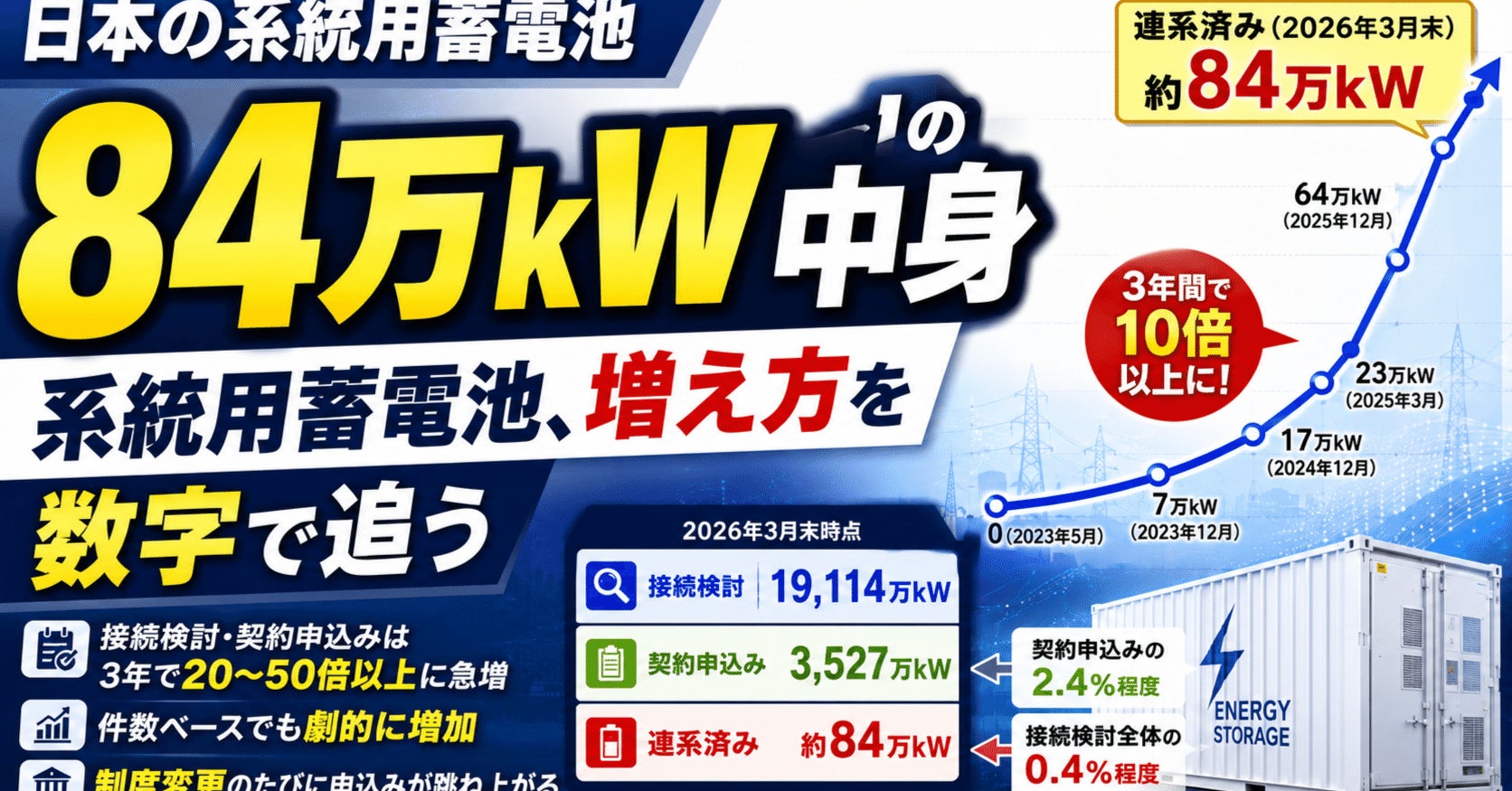
Grid battery capacity up more than tenfold in three years, webinar to outline adoption trends
Connected capacity reached about 840,000 kW at the end of March 2026, driven by rule changes and a surge in applications.