Socotec gives reasonable assurance for CFP of Asahi Kasei's Korean unit's acrylonitrile
Socotec has provided reasonable-level assurance for the fiscal 2025 product CFP of acrylonitrile made by Tongsuh Petrochemical.
On October 20, 2026, SOCOTEC Certification Japan announced that it had verified the fiscal 2025 product carbon footprint (CFP) of acrylonitrile (AN) produced at the Ulsan plant of Tongsuh Petrochemical, a wholly owned subsidiary of Asahi Kasei in South Korea, and provided assurance at a reasonable level.
A CFP shows the greenhouse gas emissions a product or activity generates over its life cycle, expressed in CO2 equivalent. It serves as basic data for business partners and customers to understand and compare the environmental impact of products. This assurance means a third party has objectively confirmed the accuracy and reliability of the figures.
The background is strong demand from companies to understand and disclose greenhouse gas emissions across their entire supply chains. The importance of external verification of product-level CFPs has grown year by year.
Tongsuh Petrochemical obtained ISCC PLUS certification in October 2021 and began producing and selling AN made from biomass-derived propylene in February 2022. Biomass refers to resources derived from living organisms, such as wood, crop residues, and food waste. Customers have been calling for further improvements in the reliability and transparency of CFP information.
AN is a basic chemical used as a raw material for acrylic fibers and ABS resins. Reliable environmental information on products reaching downstream companies from upstream also helps them when calculating their own emissions. Reliability of upstream figures forms the foundation for decarbonizing supply chains.
Attention will focus on how information backed by third-party assurance is used in transactions with customers and in disclosure settings. Calculation and assurance of CFPs are positioned as efforts to set standards for judging decarbonization of chemical products.
BLUE NOVA Hydrogen Journal view
The environmental burden of chemical products is determined by both the origin of raw materials and the manufacturing process. The significance of this assurance lies in a third party confirming the CFP of a product that uses biomass feedstock. CFPs have reached a stage where the question is not only the size of the numbers but whether the calculation can be trusted. As companies are asked to disclose emissions across their entire supply chains, the fact that an upstream production site received external assurance is one way to show customers that information is backed up. However, it must be read carefully that assurance confirms the accuracy of the calculation and does not directly show the actual emission reduction of the product itself.
Source: PR TIMES
This article was written by the editors based on the cited report and translated from Japanese. AI is used to assist in writing and translation.
More news

RIKEN VITAMIN and Puchipuchi co-develop masterbatch made from recycled raw materials
The masterbatch, which uses recycled raw materials, has been used in some Puchipuchi bubble cushioning products since April 2026.
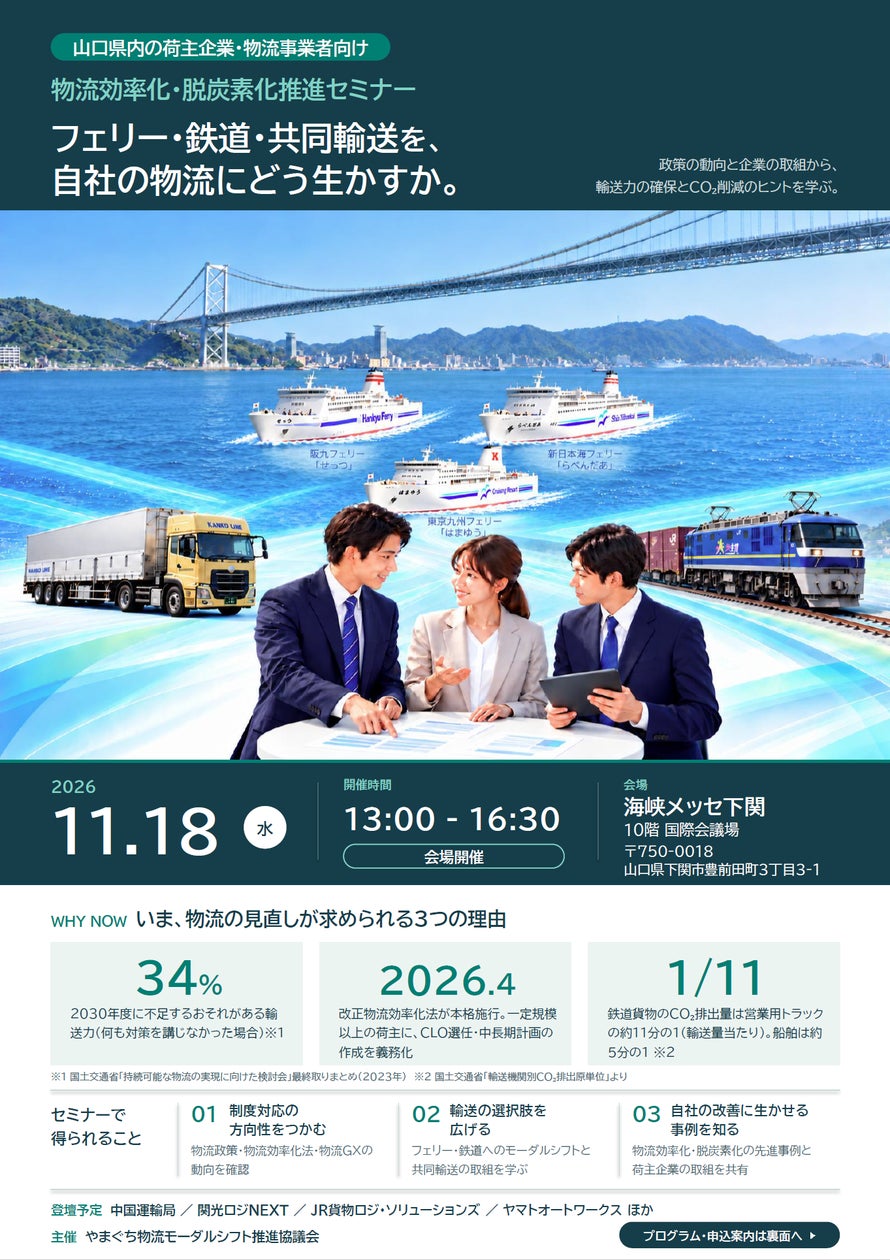
Yamaguchi seminar on logistics efficiency and decarbonization set for Nov. 18 in Shimonoseki
The seminar, following full enforcement of the revised Logistics Efficiency Act, covers modal shift and joint transport.
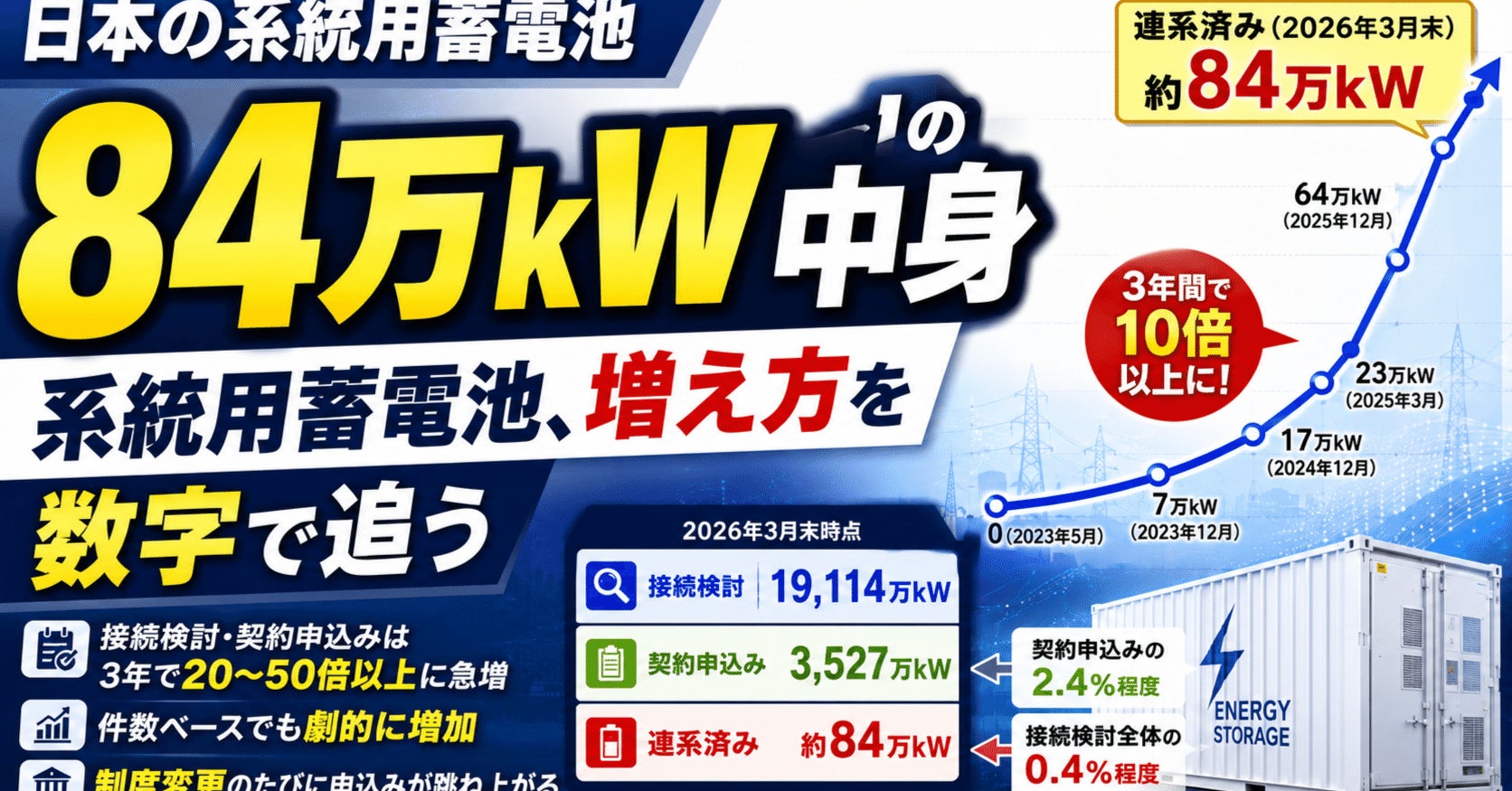
Grid battery capacity up more than tenfold in three years, webinar to outline adoption trends
Connected capacity reached about 840,000 kW at the end of March 2026, driven by rule changes and a surge in applications.

Panasonic moves up mass production of power-generating windows to 2029 as commercialization accelerates
Panasonic announced it will bring forward mass production of perovskite solar power-generating windows ahead of its previous plan.