Review examines analysis and optimization of high-pressure composite hydrogen tanks for safe green-hydrogen storage
A literature review published via Bioengineer.org assesses modeling, damage progression and optimization methods for storing green hydrogen safely.
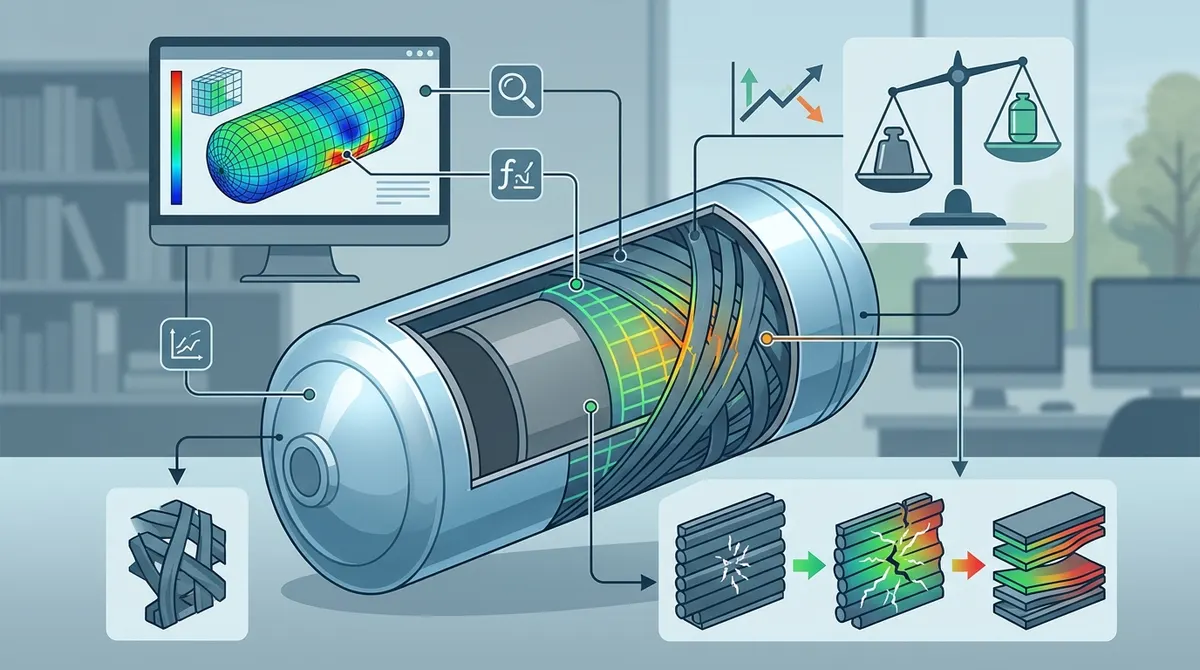
A literature review published through Bioengineer.org comprehensively evaluates design methods for high-pressure composite vessels, covering computational modeling, damage progression and optimization strategies. The vessels in focus are high-pressure composite containers used to store green hydrogen safely.
The review centers on simulation-based analysis and optimization. Such vessels typically have an inner liner covered by an outer layer of fiber-reinforced resin, and stress differs from layer to layer when internal pressure is applied. For that reason, predicting stress distribution and how failure occurs through calculation at the design stage is important.
On damage progression, the analysis covers how fiber breakage, resin cracking and delamination spread step by step. This makes it possible to estimate at which stage a vessel's strength declines. The findings bear directly on setting safety factors and considering inspection intervals.
Optimization strategies aim to secure the required pressure resistance while keeping weight down. Vessels using carbon fiber reinforcement offer a large weight reduction but have high material costs. Adjusting layer thickness and winding patterns according to design conditions is said to help balance cost and safety.
Hydrogen is expected to see wider use in fuel cell vehicles, stationary fuel cells and industrial applications. Storing and transporting hydrogen at high pressure requires lightweight, durable vessels. Evaluating vessel safety is one of the foundational technologies supporting a hydrogen society.
The significance of this review lies in comparing existing studies and organizing the applicability and challenges of computational methods. Going forward, attention will focus on how experimental data from demonstration tests will be matched with calculated results.
Background
Green hydrogen is produced by electrolyzing water using electricity from renewable energy. Because hydrogen molecules are small, it is stored either at high pressure or at extremely low temperatures. High-pressure hydrogen tanks for vehicles mainly use a structure in which a metal liner is wrapped with a composite material such as carbon fiber reinforced plastic. Composite tanks are lighter than metal ones, but stress from internal pressure differs by layer, making design and safety evaluation difficult. To estimate vessel durability, numerical simulations of stress and damage prediction are used.
Source: Bioengineer.org
This article was written by the editors based on the cited report and translated from Japanese.
More news

Kure recycler Kokko wins excellence award in Healthy Management Grand Prize
The Kure-based company was honored at a corporate association contest held in Shimane Prefecture in November 2026.
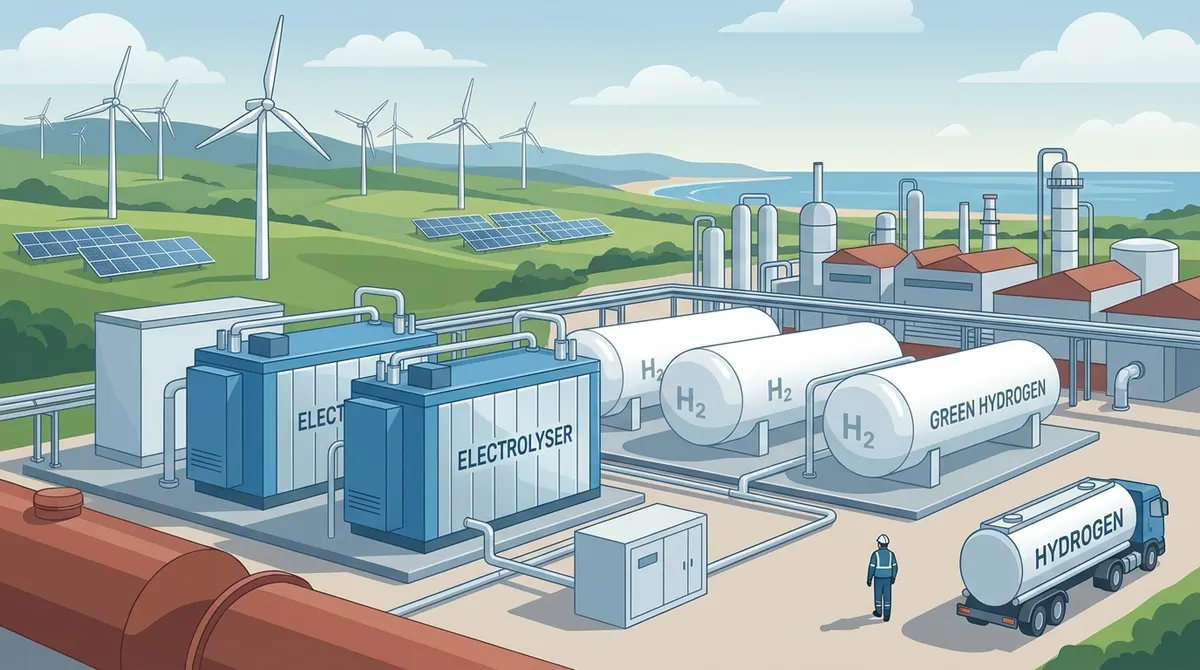
bp, Iberdrola start 25 MW green hydrogen plant at Spain's Castellón refinery
The 50-50 joint venture plans to produce about 2,800 tons of renewable hydrogen a year for use as fuel.

Fukuoka City opens call for projects to bring decarbonization tech to market
The city's Fukuoka Zero Carbon Gate support desk began accepting proposals on November 27, 2026, aiming to reach net-zero greenhouse gas emissions by fiscal 2040.
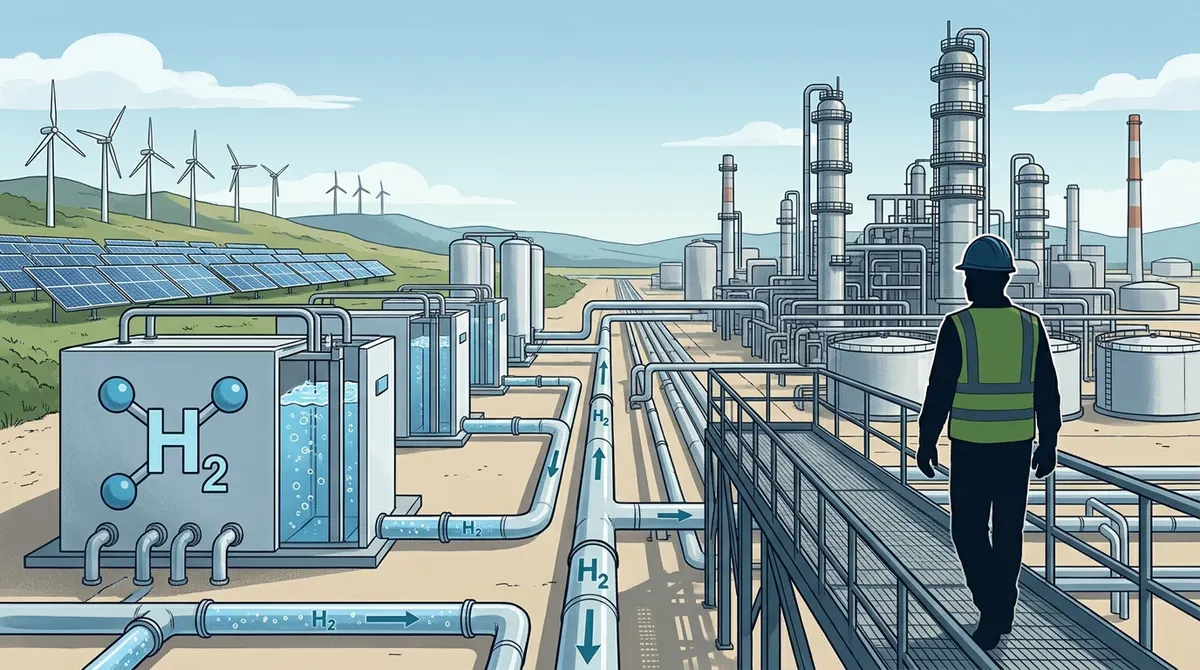
bp and Iberdrola start up 25-MW green hydrogen plant at Spanish refinery
The plant at a refinery in eastern Spain is expected to produce 2,800 tons of hydrogen a year and cut refinery CO2 emissions by 23,000 tons annually.