Yamanashi Prefecture sees hydrogen-related firms double in three years
Companies entering hydrogen-related businesses in Yamanashi Prefecture have doubled in three years, giving a boost to the region's industrial cluster.
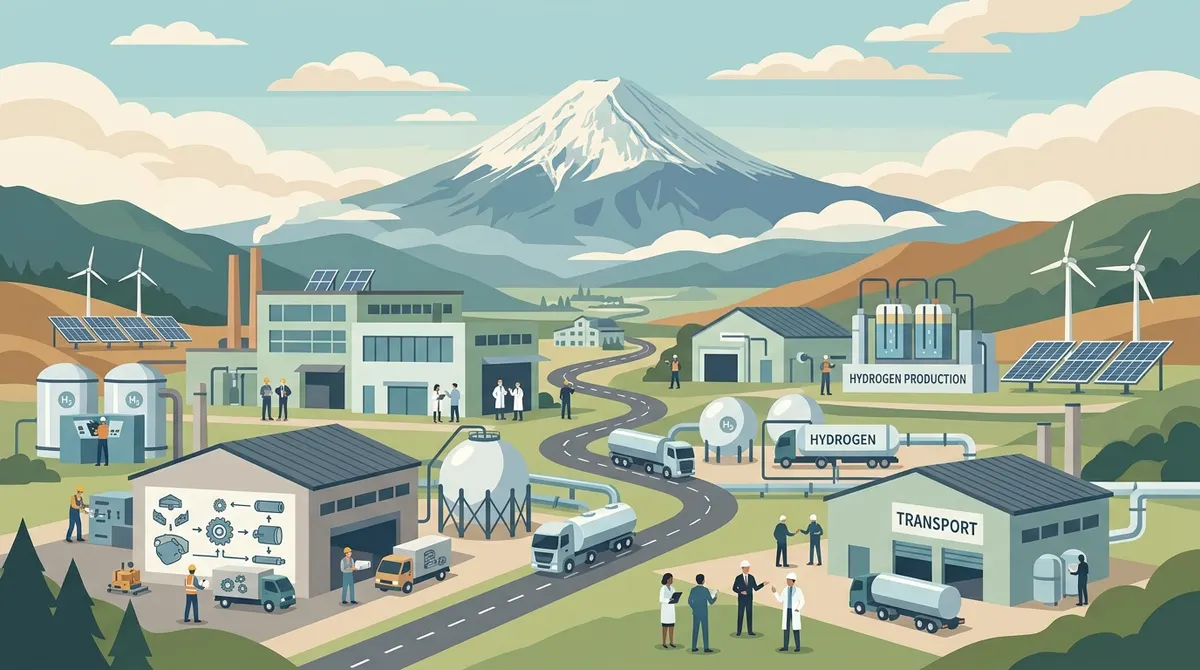
Industrial clustering of hydrogen-related businesses is advancing in Yamanashi Prefecture. The number of companies that have entered hydrogen-related businesses within the prefecture has doubled in three years. New momentum is emerging in the region's industrial base.
The hydrogen-related industry covers businesses involved in hydrogen production, storage and transport, as well as hydrogen-utilizing equipment, such as fuel cells. The field is broad, including small and medium-sized companies that make parts, materials and equipment, and it is considered one with plenty of room for new entrants.
Clustering refers to the concentration of related companies and research institutions in a certain area. When trading partners and engineers are located in the same region, procurement of parts and joint development become easier, and barriers to new entrants fall. The increase in companies entering the field this time suggests that such clustering effects are beginning to take hold.
Because hydrogen emits no carbon dioxide when burned, it is expected to expand in Japan and overseas as a promising energy carrier for decarbonization. However, it faces challenges in production costs and in storage and transport, so technological development and the creation of demand must be pursued at the same time.
For the region, it is important that diversifying businesses and creating jobs can follow. If local manufacturers enter the hydrogen field, they can win new orders by applying their existing technologies.
Hydrogen has several uses, including fuel cell vehicles and buses, heat sources for factories, and fuel for power generation. Because the performance and supply volume required differ by use, regions need to combine technologies to suit each application.
In regional industrial promotion, a key question is whether company entries will last rather than end as one-off events. Whether newly entered companies build up orders and demonstration projects and take root as businesses will be a basis for judgment going forward.
Going forward, attention will focus on whether entrant companies can expand demonstrations and orders within the prefecture and whether they can secure human resources. To judge how deeply the hydrogen industry will take root in the local economy, these developments must be watched.
BLUE NOVA Hydrogen Journal view
The fact that entrant companies in Yamanashi have doubled in three years shows that hydrogen is beginning to spread to regional industry, not just to a few large companies or major cities. Hydrogen draws attention as a decarbonization option, but technology and demand must be aligned at every stage from production to use. When companies gather in a region and trade emerges, a local industrial base can grow. Going forward, whether entrant companies can establish their businesses through orders and demonstrations will shape the future of the region's hydrogen industry.
Source: 日本経済新聞
This article was written by the editors based on the cited report and translated from Japanese. AI is used to assist in writing and translation.
More news

RIKEN VITAMIN and Puchipuchi co-develop masterbatch made from recycled raw materials
The masterbatch, which uses recycled raw materials, has been used in some Puchipuchi bubble cushioning products since April 2026.
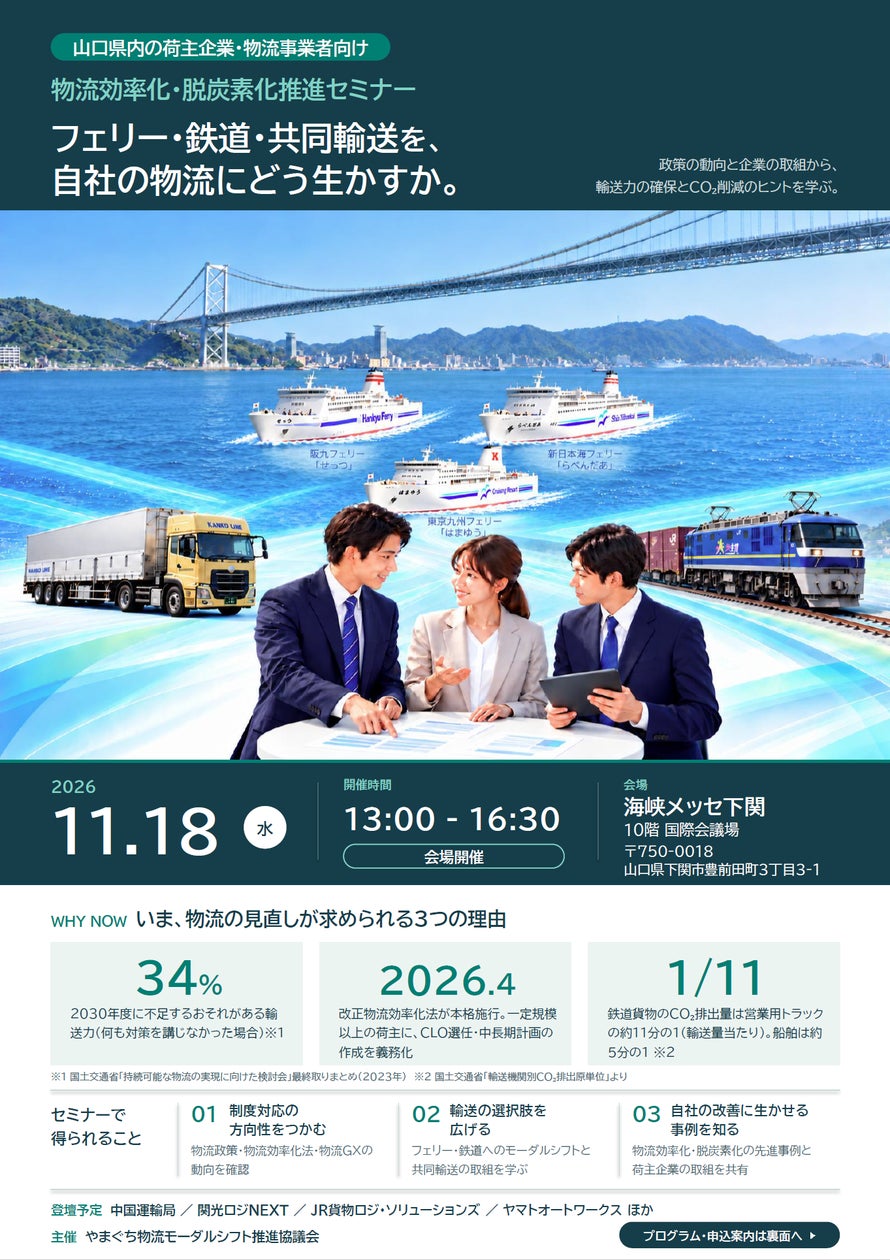
Yamaguchi seminar on logistics efficiency and decarbonization set for Nov. 18 in Shimonoseki
The seminar, following full enforcement of the revised Logistics Efficiency Act, covers modal shift and joint transport.

Socotec gives reasonable assurance for CFP of Asahi Kasei's Korean unit's acrylonitrile
Socotec has provided reasonable-level assurance for the fiscal 2025 product CFP of acrylonitrile made by Tongsuh Petrochemical.
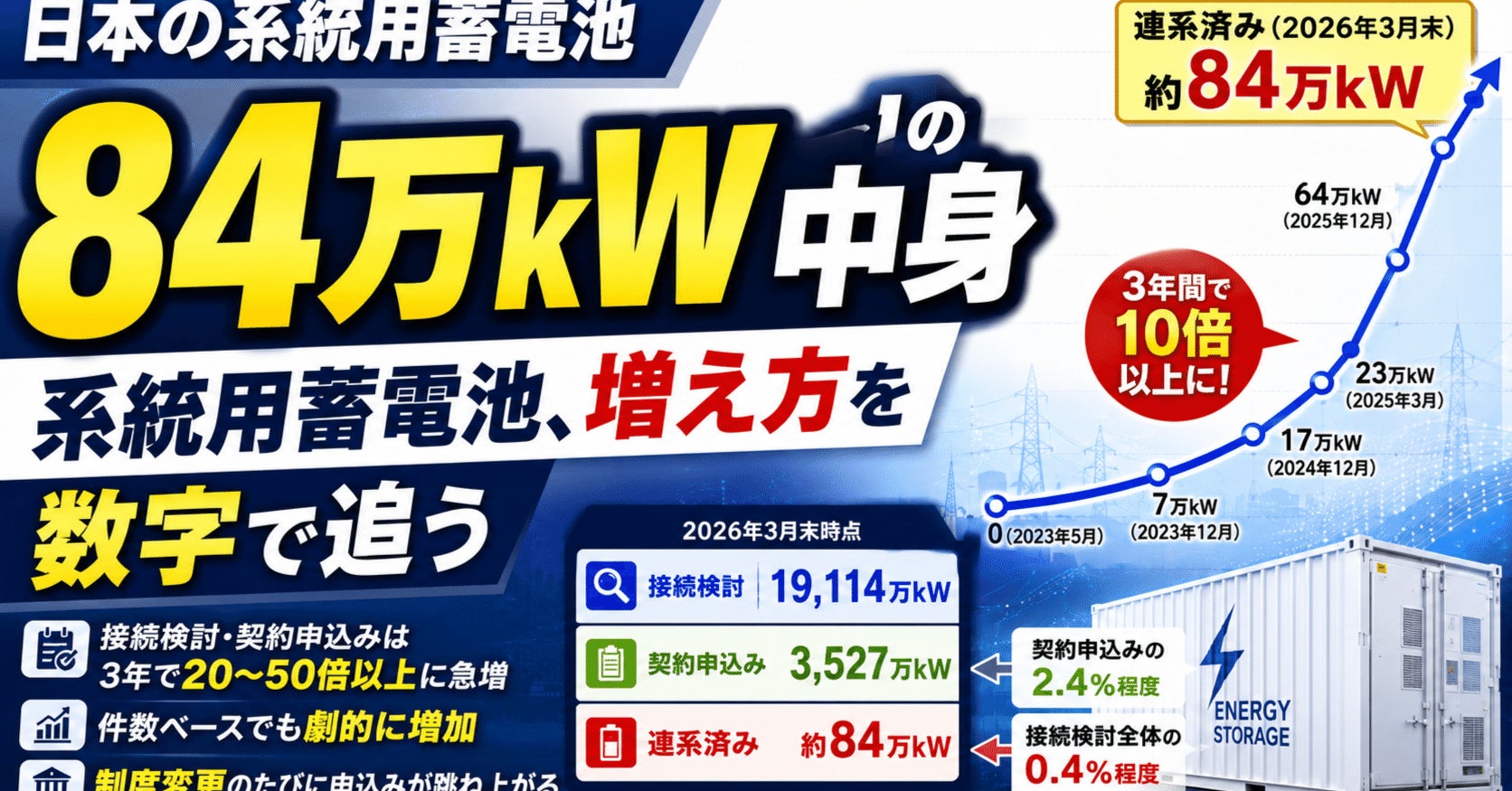
Grid battery capacity up more than tenfold in three years, webinar to outline adoption trends
Connected capacity reached about 840,000 kW at the end of March 2026, driven by rule changes and a surge in applications.