Glass-substrate perovskite solar cell based on University of Hyogo research
A perovskite solar cell using a glass substrate, based on technology from University of Hyogo, has been introduced as a long-lasting, low-cost option.

A perovskite solar cell using a glass substrate, based on technology from University of Hyogo, has been introduced. The development aims to offer a product that lasts a long time and can be installed at low cost. The technology, built on university research results, is drawing attention in the renewable energy field.
Perovskite solar cells are solar cells that use a material with a crystal structure called perovskite for their power-generating layer. Compared with silicon-based solar cells, which have been the mainstream, they use less material and can be made thin and light. Because they may be manufactured through relatively simple processes such as coating, research and development into them is advancing worldwide as a next-generation solar technology.
A substrate is the base material that supports the power-generating layer. The method introduced this time uses glass as the substrate. Glass is chemically stable and resists gas permeation, so it is expected to protect the power-generating layer from outside air and moisture. Perovskite materials are said to be vulnerable to moisture and heat, and ensuring durability has long been a major challenge for commercialization. Adopting a glass substrate is positioned as one answer to that challenge.
However, specific levels of power generation efficiency and service life are still to be clarified through future demonstrations. Keeping output stable over long periods while holding down manufacturing costs is a challenge common to perovskite solar cells in general. Whether this introduction can achieve a certain level of performance and price will be left to future verification.
As expansion of renewable energy continues, expectations are high for new types of solar cells as a factor supporting the decarbonization of electricity. Whether the glass-substrate method can withstand long-term operation will be the key point in assessing its path to commercialization. Going forward, whether specific data on durability and power output are released will be an important basis for judging the future of this technology.
BLUE NOVA Hydrogen Journal view
The significance of this event is that it directly addresses the durability challenge of perovskite solar cells by choosing a glass substrate. However, the balance between long-term output stability and cost must be shown through demonstration, and the release of future performance data and prices will be the dividing line in evaluating it.
Source: NPO法人生態会
This article was written by the editors based on the cited report and translated from Japanese. AI is used to assist in writing and translation.
More news
RIKEN VITAMIN and Puchipuchi co-develop masterbatch made from recycled raw materials
The masterbatch, which uses recycled raw materials, has been used in some Puchipuchi bubble cushioning products since April 2026.

Yamaguchi seminar on logistics efficiency and decarbonization set for Nov. 18 in Shimonoseki
The seminar, following full enforcement of the revised Logistics Efficiency Act, covers modal shift and joint transport.
Socotec gives reasonable assurance for CFP of Asahi Kasei's Korean unit's acrylonitrile
Socotec has provided reasonable-level assurance for the fiscal 2025 product CFP of acrylonitrile made by Tongsuh Petrochemical.
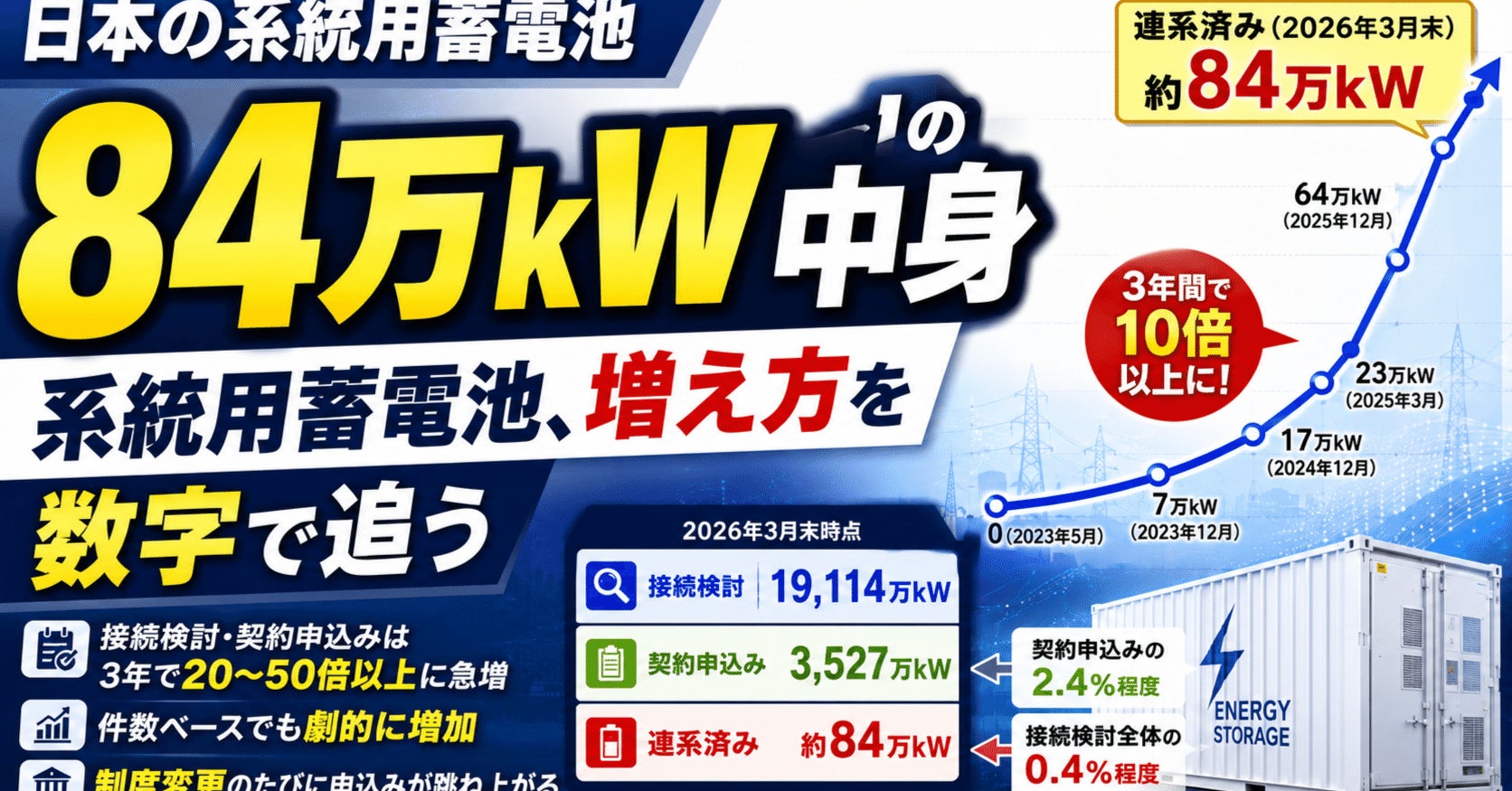
Grid battery capacity up more than tenfold in three years, webinar to outline adoption trends
Connected capacity reached about 840,000 kW at the end of March 2026, driven by rule changes and a surge in applications.